Author Archives: nancesea

Unknown's avatar

About nancesea

I live in Seattle with my husband Steve. I am an award winning Jewish educator, and primarily teach middle schoolers. My speciality is the Holocaust. My hobbies are reading, live music, Seattle sports, and photography. I am passionate about teaching the lessons of the darkest periods history in a way that inspires my students to be Upstanders. I have researched what is needed for this to happen and will be sharing writing on that here. I often travel to Central and Eastern Europe to continue to learn about this history and make connections with educators there doing similar work. I hope you enjoy my writing on my travels, my learning and Jewish thought and practice. B'vrachot - with blessings - Nance

But How Do you Know?

Standard
How I now know.

This writing was previously published by The Samis Foundation on 12/15/2025 their blog – https://samisfoundation.org/but-how-do-you-know-by-nance-morris-adler/

Often when asked what I do for a living, I will respond “I make Upstanders.” This is usually met with “But how do you know?”  In 2007, I created a curriculum on the rise of Nazism in Germany in the 1930s for 5th grade. The goal of my curriculum was that my students would know “what the world looks like when it is going terribly wrong” and that they should do something if they see it happening. In 2008 at a Facing History and Ourselves (FHAO) seminar I learned a word for what I was asking my students to become, Upstanders. Usage of this word can be traced to Samantha Power in 2003 in connection to her book on genocide as she discussed those who spoke out against the Holocaust and Armenian genocide. You can read more about the word here on FHAO’s website. 

I brought this word back to The Jewish Day School of Seattle (JDS) where I have taught for the past 21 years. At JDS, this word spread from my classroom to the wider community and is now integral to JDS’s Mission, which reads: “JDS empowers children to grow into capable, wise, and compassionate upstanders by integrating an innovative academic program with Jewish education and traditions.”
But how do I know? I have anecdotal evidence: the student who wanted to make “the film to end genocide” and created a documentary about the Rwandan genocide, the student who went to India to help improve educational opportunities for the poor, students who spoke up to school boards after 10/7 about the antisemitism they were facing. But is this enough to really know? 

As part of  my course work in the Mandel Teacher Educator Institute (MTEI)/Hebrew Union College Graduate Certificate in Educational Leadership, I was asked to research my own practice as a teacher. I immediately knew my research topic! Does learning in my classroom empower young people to be Upstanders? If so, what experiences in my Jewish Studies classes and, at JDS in general, contribute to this? How does a JDS education show up in our alumni and their life choices? 

To prepare, I read three articles to see how others have researched this question. While the educational settings were different from mine (a college classroom, a summer seminar and a public school), all used familiar instructional methods. They used stories and role models to inspire their students and generate discussion about what it means to be an Upstander. While these articles did not clarify a methodology, it was reassuring to see their successes. 

My inquiry was guided by the Structured Ethical Reflection approach, as outlined by Stevens, Brydon-Miller and Raider-Roth (2016) in The Educational Forum. I selected values to guide each step of my research. Knowing that I was researching myself and my impact on students, I felt it was important to keep humility, objectivity and transparency at the center of my methodology and analysis. I wanted to be inclusive of as many voices as possible and curious about the true impact of time in my classroom and at JDS.  All of these values were reflected in each step of my planning and research to assure that my findings would be valid and honestly reflect the input of my participants. I checked in with my participants after analyzing the data to verify that their input was properly interpreted in my findings. They confirmed that it was and found it powerful to see their experiences reflected by others as well. 

My primary research tool was a Google survey that was sent to graduates from the classes of 2011 through 2025. My main research query was: 

What experiences during your middle school years at JDS do you continue to tap into for inspiration for being an Upstander in your life? What choices have you made in life because of these experiences and the values learned from them?

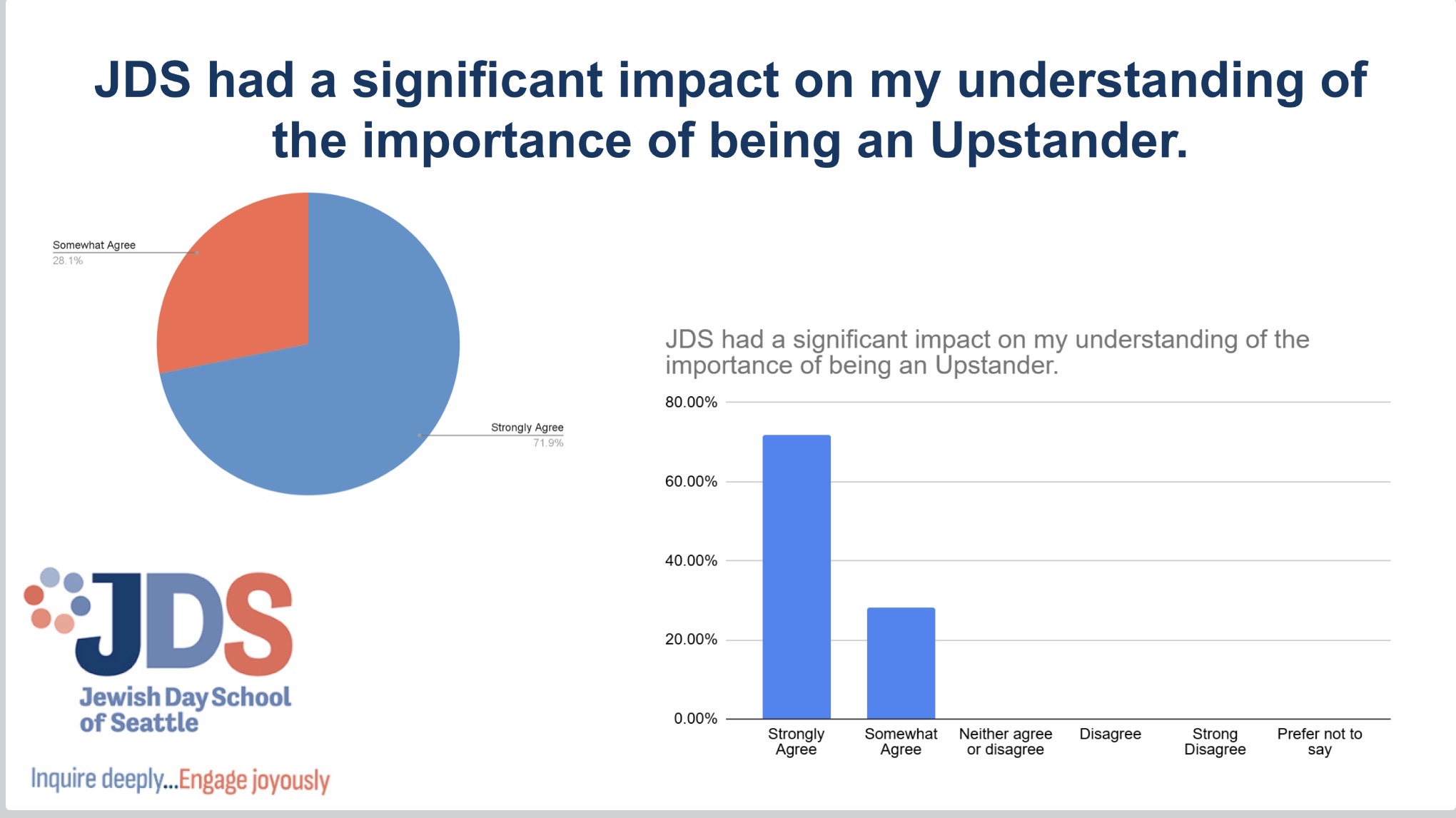
However, I did not ask these questions directly. It was important for me to know exactly how respondents defined “Upstander” and how they present as one in their lives, so they were first asked to define this word. Next, they indicated the degree to which they agreed that “JDS had a significant impact on my understanding of the importance of being an Upstander.” Their rating of fourteen experiences from across three years of Jewish history, Tanakh and rabbinics for how much of an impact each one had on their development as an Upstander allowed me to see what experiences were formative. In addition, respondents had an opportunity to share their thoughts on the listed lessons, other Jewish learning that I had not listed, and general studies experiences that had been formative.  My goal was 25 responses, and I was thrilled to receive 32. I also did six interviews.

So, what did I learn? I learned that JDS does make Upstanders. All responses to the core prompt “JDS had a significant impact on my understanding of the importance of being an Upstander” were in the positive range, with 71.9% agreeing strongly with this statement. I learned that lessons and activities that allowed students to take a deep dive into the story of one inspiring person had the strongest and most lasting impact on their awareness and confidence in being an Upstander. Respondents reflected about the impact of learning in depth about a Jewish partisan, writing their own historical narrative as a young Jewish person in Germany in the 1930s, learning about morally courageous people, and the Righteous Among the Nations. Connecting in a meaningful way to the stories of inspiring and brave people, who stood up for what was right at risk of their lives, helped my students see the difference one person could make, that even young people can make a difference, and that we never know what we are capable of until we have to.  
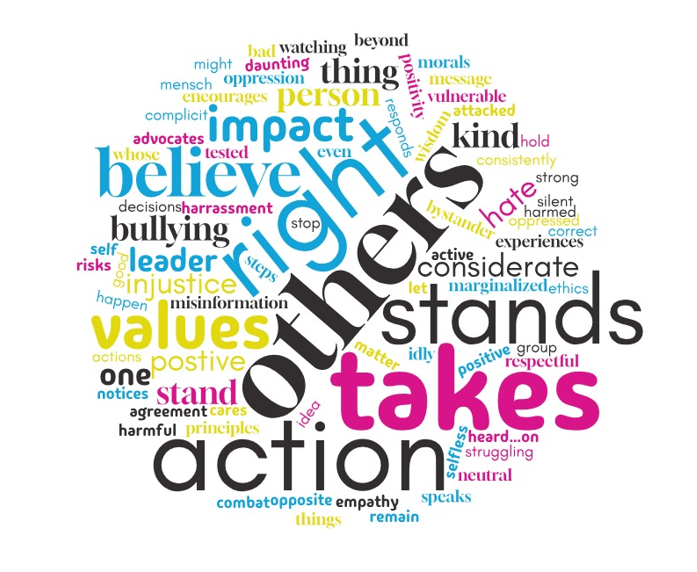
Word Art of the 32 definitions of Upstander

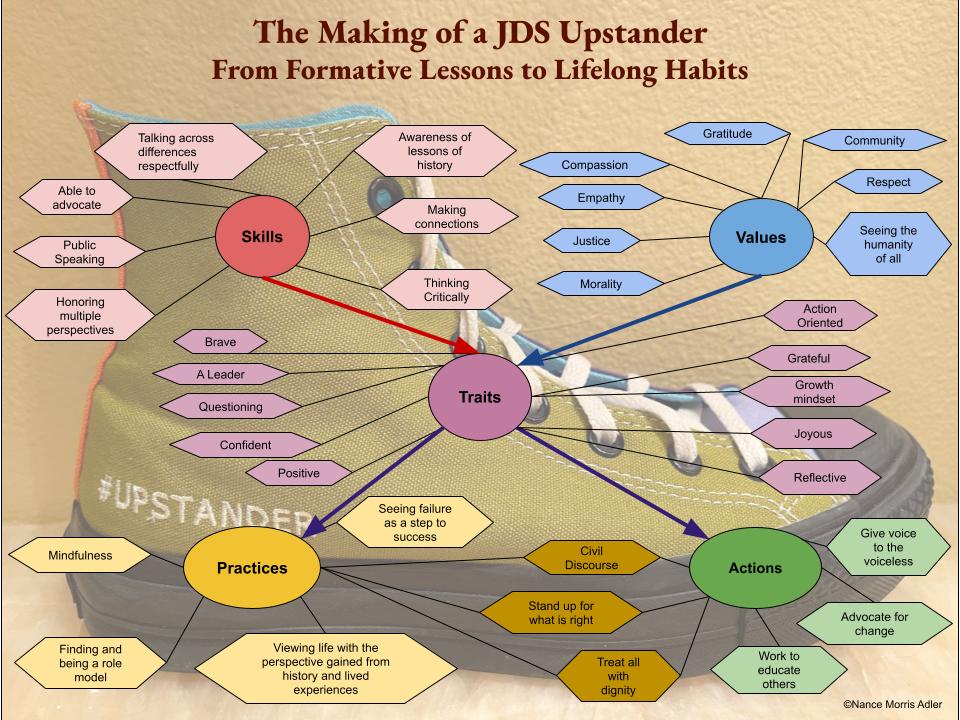
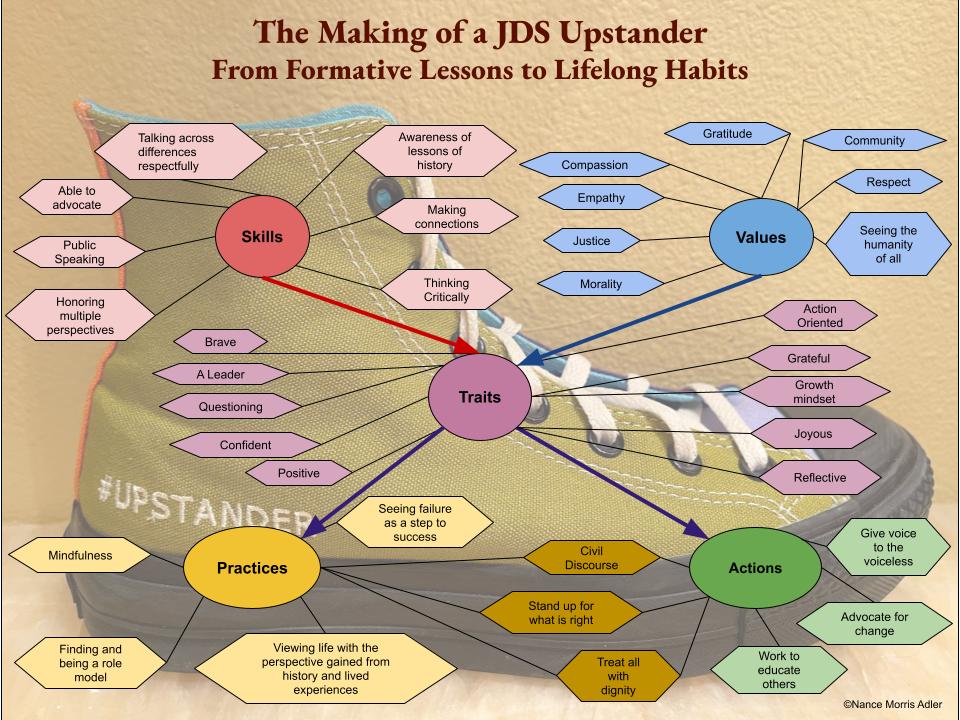
From the 32 definitions of the word Upstander, as well as from the interviews and free responses, I was able to compile a list of “habits of mind and practice of Upstanders.”  This list was then organized into the graphic below which shows the skills and values JDS students learn in their Jewish Studies classes that in turn become character traits. Graduates found that having this foundation allows them to have the daily practices necessary to take action when they see a wrong in the world. Practices are different from actions in that they are regular habits, or ways of thinking, which then contribute to the knowledge that action is needed, and the ability to take it. Skills such as  critical thinking, knowing the lessons of history, and the ability to hold multiple perspectives and speak across differences are taught implicitly and explicitly in the lessons in my classroom across three years. Values, both Jewish and universal, like seeing the humanity of all, community, empathy, compassion, gratitude and morality are modeled and taught across their years at JDS. These work together to instill traits that result in confident young people who can speak up and who ask questions and are reflective. These Upstanders allow the joy and gratitude they feel in their own lives to feed their knowledge that it is their job to help others who are not so privileged. In their daily lives they are mindful and use their awareness of history to make connections to what is going on around them and to see where change is needed. They take action, they speak up and give voice to the voiceless, they advocate and educate for change. 
As importantly, I learned that lessons I had not included, like the God Talk series in my 8th grade Theology course, are also hugely formative. This speaker program, which I viewed as a comparative religion experience, is seen by my former students as key in their development as Upstanders and many expressed their surprise that it was not included in the listed units. Yael’s comment states it most strongly: 

Besides teaching about other religions, G-d Talks allow us to empathize and understand other religions, creating a general environment of tolerance and open conversation.  When one learns from a young age that engaging in difficult conversations (like those surrounding religion) are not only allowed but encouraged, one feels more comfortable pursuing those throughout one’s life. When you fundamentally understand that even people who disagree with you are human, you are drawn to stand against hate/oppression towards any person or group of people.

As a result of my research, I have already added new learning goals for this program that makes clear these skills are not a side product, but a desired outcome. 

Seeing the impact of my teaching over the past 18 years has been humbling and deeply rewarding. I presented my work to my fellow MTEI Cohort 11 members in October, and was moved to tears by their responses to my work. One comment that really stuck with me was about how “vulnerable” I was able to be in asking these questions. This connects to the values of curiosity and honesty I included in my Structured Ethical Reflection and really being open to whatever the answers might have been to my questions. Doing this practitioner action research project provided me with data about the impact of my teaching, and enabled me to visualize the outcomes of what I teach in a way that enables me to strengthen my own teaching, as well as create workshops to educate other teachers. I shared my findings with the faculty at my own school during our fall orientation week and am working to help other teachers bring more of these valuable lessons into their classrooms. My school will be using my findings to help create a “Portrait of a JDS Graduate” that incorporates this real world data that shows what our graduates already look like. Having transferable and replicable outcomes that can be shared with other teachers allows me to help others create more Upstanders…something our world sorely needs.
Making Abraham an Upstander

Standard

Parashat Vayera D’var 5786 – 8 November 2025

(A video of my reading this d’var is linked at the bottom)

Years ago I heard Rabbi Donniel Hartman speak about the Abraham of Genesis 18:16 – 33 versus the Abraham of Genesis 22. Rabbi Donniel taught that our choice of which Abraham speaks to us said a lot about our relationship with God and Judaism. Do we want a patriarch who argues with God to save strangers – to make sure that the Judge of all judges fairly and does not punish the righteous with the wicked – or do we want an Abraham who quietly agrees to take his “only son, the one you love” and offer him up on some mountain cliff to be determined later? Do we want a Judaism that encourages us to foster a habit of standing up  – even to God – versus one that models bystanding even in our own lives? 

When asked what I do for a living, I will often respond “I make Upstanders.” Not what most people expect for an answer and usually results in a few questions – “what is an Upstander?” and “how do you know?” being most common. I define an Upstander as one who takes action when they see an injustice – who does not stand by and watch others bully, oppress or persecute people, but rather steps in to do something about it – or better, work to prevent it in the first place. I have stories of amazing things my former students have done since leaving my classroom and this anecdotal evidence is impressive, but does not convince those looking for a more evidence based response. I have been privileged to be part of the Mandel Teacher Educator Institute for the past two years and as part of this fellowship was able to do a graduate certificate at HUC in Practitioner Research. The work of this certificate has been researching my own practice as a teacher and my research question came to me quickly – Do I make upstanders or not? And if so, what are the experiences in my classroom that most impact this development?

A Google survey completed by 32 JDS alumni from 2011 – 2025 and six interviews later,  the answer is a resounding yes – that the coursework in my classroom, as well as other classes at JDS – does instill in young people a clear understanding of the importance of being an upstander – and now I have 32 definitions of this word and not just my own –  as part of my research I had the respondents write their own definitions for the word “Upstander.” This information was very informative and provided a window into how each of these young people thought about being an upstander. Respondents also had an opportunity to respond with details about their learning in Jewish Studies as well as their General Studies classes and these free responses were also very helpful in getting a full picture of what the formative lessons were during their years at JDS and just what went into making an upstander. 

As I coded these responses I began to compile a list of the “habits and practices of an Upstander” on a giant post-it note on my wall. I then sorted these into different categories – skills, values, character traits, practices and actions. This work helped me create a graphic that shows the development of a JDS upstander. 

I would like to use the traits and the actions of an Upstander – as determined by my research – to discuss these two stories of Abraham and think about what might have helped Abraham in Genesis 22 be more like the Abraham of Genesis 18. 

The traits that were named by my former students as essential to being an Upstander are: brave, a leader, questioning, confident, positive, action oriented, grateful, joyous, reflective, and possessing a growth mindset. 

Abraham facing God as he is given insight into God’s plans for the home of his nephew Lot and the neighboring town is seen as a leader by God. God shares his plans with Abe because God plans to make Abraham the father of a great nation by whom all the nations of the world will bless themselves. Abraham takes the time allowed by the other two visitors to leave to consider what God has said. He then acts bravely and asks a question of God – “Will you sweep away the innocent along with the guilty?” He is confident that God could not mean to punish the innocent and puts forth a positive vision of saving the city for the sake of the innocent. He challenges God “Shall not the judge of all the earth deal justly?” 

Civil discourse is an action that upstanders use and Abraham is trying to have a civil discussion with God, Abraham is giving a voice to the voiceless – he is speaking for the innocents of Sodom and Gomorrah who stand to be wiped off the earth for the sins of their neighbors and he is advocating for change in God’s plan. Abraham is considering all the residents with dignity and he is standing up for what is right. All of these are actions named as those of Upstanders by JDS graduates.  Abraham continues to question God – being willing to accept that there  might not be 50, 40, 30, even 20 innocents in these towns – and lowers the bar with each increasingly meek request. His bravery in continuing to lower the number with each request and to continue to press God to do the right thing is impressive. Who among us can imagine making such requests of a human leader let alone God!? Abraham reflects on each request, on God’s agreement and is grateful for this agreement – but also knows that the number might need to be lower. His reminding of God that God is the judge of all and should be just reminds God of God’s role and to educate God about what God’s actions look like to the leader he has chosen. He is mindful of the terrible fate awaiting those in Sodom and Gomorrah and acts in a way informed by this perspective.

Abraham in this story also demonstrates many of the skills of an Upstander as found in my coding of my data. He is advocating and using his public speaking skills to confront God. He is thinking critically about what might be acceptable to God – he stops at 10 perhaps sensing God was not willing to go lower. He is making connections for God – reminding God of how God’s actions have lasting consequences and lessons for humans. Values of an Upstander include compassion, empathy, justice, morality, community, respect and gratitude – Abraham demonstrates all of these in his interactions with God in chapter 18. His compassion for those in Sodom and Gomorrah – empathy perhaps for his nephew and his family, his demanding God be just and act morally are clear as are his sense of community with these people. He speaks to God, even as he challenges him, with respect and expresses gratitude when God agrees to each request. 


Abraham in this story is a patriarch worth emulating. He is being a role model – a practice of Upstanders – and showing how to stand up to unjust power and to demand that even God acts with morality. He does not go along with God’s plan, he does not just request God spares Lot and his family, he advocates for all the innocents of Sodom and Gomorrah and pushes God to find a reason to not destroy these communities. So what happens between here and the story of Akedat Yitzhak – the binding of Isaac just four short chapters later? 

In Chapter 22 God speaks to Abraham and Abraham responds with that word of destiny “Hineini” “Here I am.” This word indicates an openness to what follows and a willingness to be commanded or used for God’s purpose. God then proceeds to command Abraham to take his son “your favored one, Isaac” and to go to Moriah and offer him up as an “oleh” burnt offering on one of the heights there that God will point out later. Now, prior to calling out to Abraham we are told that GOd is putting Abraham to the test. Abe does not know this and I feel that we are left to determine if he passes it or not. I would say that he does not – he certainly fails at being an upstander. Being commanded to offer up your son – a son of your old age that was born after a promise from God that you would finally have a son with your elderly wife, the only son you have now because you already sent the other one away because your wife asked you to – is not a command that anyone should follow unquestioningly – but Abraham does. That questioning and confident leader who was brave and stood up to God is gone. There is no discourse – civil or otherwise – as Abraham silently gets up and starts preparing for the journey. Abraham does not show any compassion or empathy for his wife, whose only son is about to be killed, there is no evidence he even tells her where he is going and midrash says her death in the next parsha is due to her finding out from HaSatan where father and son have gone. There is no reflection on the justice or morality of this request. A wondering when we started doing child sacrifices might have been voiced. 


Abraham is action oriented as he gets up early, packs a donkey, and heads off with his son and some servants. Again there is no discussion, only a few words are recorded on day three and those are vague and either hopeful or lies. “God will provide for the sheep” is the response to Isaac wondering where the offering is. In the end, God does indeed provide the ram for the sacrifice and it is God, or the angel, who gives voice to stop Abraham’s blind obedience to God’s command. 


Abraham’s lack of curiosity or demand for justice continues when God declares that “For now I know that you fear God, since you have not withheld your son, your favored son, from Me.” I would have been furious. God needed this proof? Abraham has gone through so much at the command of God and has proven his faithfulness over and over. I would have demanded to know why God needed even more proof – and proof gained in such a cruel and unjust manner. I would have asked God about the damage done to my son, the sorrow caused for my wife, my own trauma and guilt at being willing to do this just so God – the all knowing God – could be sure of my faithfulness.  We get none of this from Abraham. In one of my favorite Rosh HaShanah books – The White Ram – which I read each year to my middle schoolers – Abraham does question why God needed Abraham to prove his love and faith since God knows all. God responds “Oh, I knew, but I wanted to be sure everyone else knows so that would follow your example.” Follow his example?? This is hardly an Abraham whose example we should follow. Back in the text in the Torah, God makes Abraham some more nice promises and then Abe returns to his servants and heads to Beer-sheba. Next we know Sarah is dead and Isaac never speaks to his father again. Abraham’s days as a role model are over. 

My research, and that of other researchers who have set out to figure out what it takes to “create Upstanders” shows that an inspiring role model has an incredible impact on helping young people know that they should take action. In my findings I name this as “The Power of One Significant Story.” In my classroom these role models are Jewish Partisans, RIghteous among the Nations, individuals who show moral courage and create change in the world or save lives, Rabbi Avraham Joshua Heschel who marched in Selma, Jan Karski, Hebrew prophets who spoke out against corruption at the highest levels and others throughout our history who stood up and led rather than allowing history to happen to them. Abraham in Genesis 18 would be a Significant Story. Abraham in chapter 22 would not. Jewish values of v’ahavta re’echa k’mocha – treat your fellow as yourself – the core text of Judaism which teaches love and empathy – as well as “lo taamod al dam re’echa” “do not stand on the blood of your fellow” which means that we should prevent blood from being spilled and act to protect those who are likely to be harmed – are taught in sixth grade in my classroom to provide a values based framework for why it is important to be an upstander. Chapter 18 Abraham demonstrates these values – he is actively working to stop the bloodshed of innocents in Sodom and Gomorrah – Akedat Yitzhak has Abraham ready to spill the blood of his own son. 

Remaining engaged and capable – let alone willing – to be an upstander can be exhausting. I know this is very true in our current reality. Compassion fatigue is very real and there is so much going on that we would like to fix, but which we are powerless to really impact. So how does one remain mindful and engaged? The three traits of an Upstander as named by my former students that were most surprising were joyous, grateful and positive – add to this the practice of mindfulness which several of those interviewed gave much credit to for their commitment to doing good in the world. Gratitude for what we have creates a capacity for wanting others to have the same things and reminds us that our work for their rights and well being isn’t leaving us without. Being joyous also gives energy and creates the positivity needed to face situations that feel overwhelming or frightening in order to help others. Mindfulness as a daily practice allows these young people to be aware of what is going on in their worlds and to stay in a mindset that is open to what others are experiencing. It allows them to not be overwhelmed by all that is going on and therefore have more capacity to help. One of my former students, let’s call him Solomon, said that daily mindfulness sessions help him to focus on being his truest self “Solomon Solomon”  and his truest self is an Upstander. “Solomon Solomon loves all people and cares and is trying to be empathetic and the best, most righteous Jewish version of myself would be to stand up for the inequities that I see in the world. They also help him monitor his energy and that it is being spent in productive ways that allow him to make an impact. “And not just that upstanding is exhausting. So when are the right times to upstand and what are the times to pick your battles and say today’s not that day?”


One might surmise that being Abraham in his old age, having sent away Hagar and Ishmael, pressured to create a people who will worship God and be a great nation when you have only one son to start with, might have been a lot to deal with. Perhaps Abraham no longer had the joy, positivity and gratitude necessary to have the capacity to stand up to God again. Perhaps his failure to save Sodom and Gomorrah weighed on him and made him less likely to make demands of God? Following the commands of God, who had given him all that he had, might have been how he thought he was to show gratitude – rather than by acting according to the values that God sought to instill in him. To know God should be fair and just in chapter 18 but not demand it in 22 when your own son’s life is at stake, indicates a serious shift in energy and mindset. How might Abraham have been better able to be an upstander for Isaac?  How do any of us find the energy to push back against all that is wrong in the world? 

Community, gratitude, mindfulness, seeing failure as a stepping stone to success, and having the perspective of history can help us to know what is important and to continue to find the energy to defend it. Finding role models who inspire us, being a role model for others can also give us energy and ideas. Remembering the core values of our traditions as well as the universal values of empathy and compassion keeps us centered. Remembering that all humans are made b’tzelem elohim – in the image of God and are worthy of the same dignity and respect will guide us in our choices and actions. Let us not be like Abraham and sacrifice what is most important to us because we have lost our abilities to be upstanders – let us lean into community, joy and gratitude and remain strong. 

Don’t be Jonah

Standard

Darshan Jonah

Yom Kippur 5784

Nance Morris Adler

(I was honored to give the sermon on the Book of Jonah at my shul this Yom Kippur. This is my teaching. I dedicated it to my students who are always my teachers.)

In 6th grade Jewmanities – that is what I call my classes at JDS as I teach a combination of Jewish text and social studies – so like Humanities but with a very Jewish lens – I teach a unit called “There is No Profit – PROFIT – in Prophecy.” In this unit my students learn about the 10 parts of a classical book of prophecy in the Jewish tradition, as well as about the life of a prophet. They then choose a modern problem and must write their own book of prophecy where they are called by God to solve this problem. The students love this unit and have written some amazing stories over the years.

So you can imagine, having taught this unit for 12 years now, that I am VERY familiar with how a Hebrew prophet is meant to behave and what a book of prophecy usually contains. I can list the 10 common parts and cite examples from across the major and minor prophets to show what they look like. So, despite having a list of ideas of what to talk about today that covers multiple notebook pages and is inspired by the great darshanim who have gone before me, I am ending up having the most to say about how Jonah – and the Book of Jonah – do not fit this mold and to offer up a few ideas as to perhaps why this is and what we can learn from it. If I am really lucky, I will manage to work most of those other ideas in as well. 

First I want to set Jonah in time and place as that information will be important in much that I have to say about why Jonah and the Book of Jonah are different. Yonah Ben Ammitai is mentioned in 2 Kings 14:25 – this would place a historical individual named Jonah during the reign of Jeroboam II in the mid 8th century BCE. Based on the language used and particulars of the story however, most scholars place the book in the post-exilic period around the late 5th or 4th century BCE. Jonah lives in a post-exilic world – a world where both he and those with whom he interacts – from the sailors to the Ninevites – know that God will carry out God’s threats of destruction and exile – and this is important to both his actions and his success. 

So. Back to the parts of a book of prophecy. The first part – really the first three parts – are about God calling the prophet. While this is the first part, it does not always happen first. God will let the chosen individual know that they have been selected to be God’s voice to the Israelites. This can be done subtly or with great fanfare like Ezekiel’s vision of God’s merkavah – throne/chariot – and the Hayiot HaKodesh. After the call, the newly selected prophet will protest, say no, make excuses. Isaiah’s call comes in chapter 6 and he responds by saying “Woe is me! I am undone because I am a man of unclean lips, and I dwell in the midst of a people with unclean lips…” God then demonstrates a prescient knowledge of germ theory and basically autoclaves Isaiah’s unclean lips by sending an angel with a hot coal to make them clean “Behold this has touched your lips and your iniquity is taken away and your sin is purged.” Now, if this story of a coal and lips doesn’t bring you right to Moses, your blood sugar might be falling this late in the day on Yom Kippur. Moses is the master of the refusal. When God speaks to Moses out of the burning bush and tells him to return to Egypt and “let my people go,” Moses says no FIVE times. God gives long speeches after each reason to reassure Moses and to provide evidence – a rod that does miracles – specific instructions – God gives Godself a new name even – but Moses continues to say no. He blames being “thick of tongue” and says he won’t be a good spokesperson. Midrash comes in to explain that he burnt his tongue on a coal during a test by Pharaoh’s magicians as a baby. One coal makes you holy, another gives you a lisp. God at this point gets angry and says Aharon is coming and he is a good public speaker and for Moses to get moving back to Egypt and meet him. 

So, Jonah is clearly called by God – no big show but a clear directive. Jonah makes clear that he has no intention to obey, but does not tell God why and allow God to placate his worries or address his concerns. He hightails it out of town towards Tarshish. Jonah clearly forgot about that “all seeing” aspect of God and thought he could slip out of town unnoticed. Not so. God knows where Jonah is and sends a terrible storm. 

I want to pause here and talk about what Jonah’s concerns might have been. Why did he not want to go to Nineveh? We know how the story ends and Jonah is the only “successful” prophet in that he gets the people of Nineveh to repent and God does not have to punish them. Jonah delivers a pared down message – none of the metaphorical language, parables, symbolic acts, eschatological visions or other things that are parts of a classical book of prophecy. But yet the people listen and change their ways. God’s judgment is stayed – or the punishment is stayed as the judgment is for good. Which is what we are all here praying for today – for our changes and attempts to be better to be seen and to be good enough to earn us another chance to continue to better ourselves. 

So why did Jonah want nothing to do with this mission? Why was he willing to flee an all seeing God? Why was he willing to be thrown overboard to save the innocent sailors but not willing to go to Nineveh and give a little prophecy? 

There are a variety of theories put forth over the centuries by rabbis and commentators as to why Jonah wanted nothing to do with this assignment. Some say Jonah knew that the people would repent and that God would not punish them – some say this meant that Jonah was worried he would look like a false prophet – others say that Jonah worried it would make God look weak or imaginary since nothing would happen. Still others say that Jonah wanted God to act with pure “din” judgment but knew that God would actually act with a combination of din and hesed and therefore no punishment would occur. The episode at the end of the book – with the plant – is God showing that same hesed – lovingkindness – to Jonah in an attempt for him to see the importance of this quality of God. Nothing happening in Nineveh would “prove” Jonah was successful but can we learn from the absence of something? People have a hard enough time learning from actual historical events or current events, let alone from “nothing” happening. Today when something is predicted and then doesn’t happen, many assume that the original prediction was wrong, rather than that conditions changed or the event was avoided. This would be in line with one of the reasons given for Jonah’s refusal. Would others say “Wow! God was going to destroy that place but they all repented – even the donkeys – so I better repent of my evil ways as well so God doesn’t destroy me.” Or would they say “That Jonah Ben Ammitai is full of hot air. He is one of the false prophets we have been warned about.” Jonah’s actions indicate he was concerned it would be the latter. 

One of the difficulties of the job of a Hebrew Prophet is that they work both for God and for the Jewish People. They are delivering God’s message but they also really want the people to change and avoid God’s wrath. They try to temper God’s anger and delay God’s judgment. They argue and wrestle with God. They spin beautiful metaphorical passages to explain the feeling of betrayal and paint a picture of what could be. They live a life caught between God and the people and suffer terribly for it. They are abused – Jeremiah in particular suffers terribly – they are abandoned by family and friends. Many seem to have mental health issues, depression. But they work for the Jewish people – THEIR people. God sends Jonah to speak to the Ninevites. These are NOT his people. Does Jonah really care about them or whether they hear his message? Even after he emerges from the Dag Gadol – big fish – and heads to Nineveh, he really puts minimal effort into his work. No flourishes of metaphor. No parables. No visions of a perfect world once they mend their ways. No elaborate symbolic acts to reach those who need a visual rather than a verbal message. Nope. A bare bones “Forty days more and Nineveh will be overthrown!” But yet the people immediately “believed God” and proclaim a fast and put on sackcloth. The King sits in ashes and declares a fast for all including the “flock and herd.” He commands all to “turn back from his evil ways and from the injustice of which he is guilty” so that God might not punish them. 

The response of the King of Nineveh could not be more different from that of Israelite kings to the prophets who came before them. Sure Jeremiah is rescued from the pit but he is sworn to secrecy about the king’s help in that. The entry in the Jewish Encylopedia states that the behavior of the King of Nineveh clearly puts the Book of Jonah into the category of midrash and myth as this would never happen. But it makes me wonder about the timing of the Book of Jonah and it being post-exilic. If the king knew what had happened to the Kingdoms of Judah and Israel – the Southern Kingdom and the Northern as well – and if he saw the human historical events as being allowed by God as Jewish tradition frames them – then he would know that God was capable of destroying Nineveh. He would know that God’s patience had limits. He might wonder if those limits were shorter for those who were not God’s chosen people. This knowing the lessons of history – something near and dear to my heart as a Holocaust educator – and ACTUALLY learning from them to save his own people might be AS mythological as the Jewish Encyclopedia article writer believed his responding to a Hebrew prophet was. I see the role of the King of Nineveh as a strong leader, with the wellbeing of his people clearly primary in his motivations as key to the success of Jonah’s work. The king walks the walk. He repents and models what that looks like for his people. Sure he is saving his kingdom as well, but lowering himself in order to do that is not a forgone conclusion. Many rulers, hyped up on their own power and reputation, would have ordered others to wear sackcloth and ashes but ordered theirs from the Biblical equivalent of Neiman Marcus. 

While Jonah doesn’t use parables and metaphors, there are within the story many elements that can be seen as metaphoric. Jonah’s time in the DagGadol – big fish – is one such element. Jonah wants judgment – he wants the people to have to fully fix everything they are doing wrong or suffer. He knows God will look away from the small missed marks if they fix the big ones. He does not value compassion. While the book is written in a post-exilic world, Jonah – either the historical Jonah ben Ammitai who lived pre-exile, or Jonah of the post-exilic book – did not live through exile. He did not suffer defeat and forced expulsion from his homeland. Jonah does not see value in empathy and lovingkindness. If he was going to go to Nineveh he expected God to be fully focused on “din” but he knew that God would not be. God provides Jonah with an experience of exile in the belly of the big fish. Jonah is cut off from all he knows. He is in a strange place and in fear for his life. While teaching Jonah this past week, I asked my sixth graders to imagine being alone in a place like the belly of a giant fish and what would they be thinking. After several described how they would try to make the fish throw them up – missing the “thinking” part of my question – one finally put it perfectly “I would miss society and all that I knew.” On the third day Jonah is moved to prayer “I thought I was driven away out of Your sight. Would I ever gaze again upon Your Holy Temple?” Jonah realizes that his actions are “folly” “Those who cling to empty folly forsake their own welfare. But I, with loud thanksgiving will sacrifice to You; what I have vowed I will perform. Deliverance is the Lord’s.” God has Jonah spewed out on dry land and he proceeds to Nineveh. This experience of being isolated and feeling rejected by God allows Jonah to feel enough compassion to get him to Nineveh and deliver God’s message. I can imagine that Jonah knew that God could have dealt much harsher with him for trying to escape the job of being a prophet – a job all of the other major and minor prophets make clear is not one that can ultimately be refused or escaped. I would think God would have been extra angry at the insult of Jonah thinking he could escape an all knowing deity. This knowledge – that he had been shown both din and hesed – would, we hope, make Jonah value both attributes and be glad that God displays both when acting in the world. But, sadly, his response to Nineveh avoiding destruction shows that he has not fully learned this lesson. 

Here on Yom Kippur the bigger question is do we learn the lesson? Do we allow the times in our lives when we have needed compassion and mercy to teach us that we must then extend these qualities to others? I have spoken in the past about Judaism – religion in general – needing to be about love. R. David Hartmann says that the core of Judaism is love and all understanding of God and Jewish law needs to center on that knowledge. We need love – from other humans and from ourselves – and we need to remember the core teaching of Judaism – to treat others as we want to be treated – or “do not do to others that which is distasteful/abhorrent to you.” Jonah enjoyed God’s mercy when he was spit out of the big fish and allowed to live and he also enjoyed the shade of the plant that God provided to shelter him from the heat. Despite this, Jonah was angry that God showed similar mercy to an entire city state by sparing Nineveh. He is angry when his plant dies, but has no similar compassion for “Nineveh, that great city, in which there are more than a hundred and twenty thousand persons who do not yet know their right hand from their left, and many beasts as well.” 

In many issues today we see those who benefit from compassion and mercy in our society but who do not extend the same to others. Those whose family came here as immigrants who do not wish to allow others fleeing persecution to be given entrance. Those who enjoy rights that they would deny others. Those who benefit from social networks they would deny others. Those who request support and services but deny the same to similarly needy individuals. Some don’t even extend compassion to themselves and vote and advocate against their own needs. Those who want to make all the choices about their lives, but deny that basic human right to others. These individuals would be angry at God for sparing Nineveh but expect shade and grace extended for them. They do not want to hear Jonah, and those whom they follow do not know how to model humility and change for the better of all. 
The Book of Jonah is here to make us stop and consider our behavior and our ability to learn and grow. Judaism provides us with a yearly opportunity – a yearly requirement really – an oblitunity if you will – to review our behavior and resolve to do better in the future. We are all human and we all act in ways that are not always full of love. We are influenced by our experiences, by our education, the news, social media, friends and family. Our job is to hear the terse and unpoetic warning of Jonah and repent of our misdeeds. Jonah is not a typical Hebrew prophet trying to change the ways of a stiffnecked people bent on pissing off God by repeatedly breaking the terms of our b’rit – our covenant. Those prophets don’t want their jobs because they know they are not going to be successful and are going to be hated. They are speaking to a familiar people and they know what to expect. They are one of those stiffnecked people and know that permanent change has not happened since Moses led them out of Egypt and isn’t going to happen now. Jonah is speaking to a different people. Jonah’s audience is open to his warning – they want to avoid destruction. They have strong leadership that is open to change and models what that looks like. Humility and compassion are needed qualities in our world – Empathy and continued growth as well. Not just in leaders, but for all of us. The lesson of Jonah is to not be Jonah – but to “walk in God’s ways” and show empathy and compassion – to temper justice with mercy, and to remember that we are all humans – flawed but capable of positive change and learning to work for the betterment of all. May we all be sealed for a good year – a year of compassion, mercy, peace, love and growth – because of our dedication to Teshuvah and Tikkun – repentance and repair.
Working Towards Full Repentance – D’var Parshat Vayiggash 8738 – given 31 December 2022

Standard
Working Towards Full Repentance – D’var Parshat Vayiggash 8738 – given 31 December 2022
Recording of me delivering this text

When learning about the steps of Teshuvah – the repair and return to a good place that is meant to happen after we “break” a relationship, a trust, or someone else’s property – we don’t always learn about the final step – the proof that the intention behind the apology and repair was sincere and lasting – that “don’t do it again if the opportunity arises” step. Maimonides wrote “What is perfect Teshuvah? This occurs when an opportunity presents itself for repeating the offense once committed, and the offender is able to commit the offense, but refrains from doing so because of the Teshuvah – not out of fear or failure of vigor.” We see this in action in this week’s parsha. Joseph, incognito as an Egyptian official, frames Benjamin and tells his brothers that they must leave Benjamin behind. Having been that spoiled and favorited youngest child and having seen how his brothers treated him many years prior, he is interested to see what their response will be. He is moved to tears, and to revealing himself, when Judah throws himself on the ground and begs, in the name of his elderly father who has already lost one son, to keep him instead of Benjamin. Joseph dismisses his servants and reveals himself to his brothers and tells them that it was God’s doing that sent him to Egypt and that they should not blame themselves.

Some may feel Joseph was being manipulative and mean to set up this test, but his brothers wanted to kill him and “settled” for selling him into slavery. They faked his death by wild animal and broke their father’s heart. Surely Joseph is allowed to test to see if they have learned to overcome their jealousy and love even their father’s favorites. Rabbi Sacks in a d’var on this parsha says that Joseph is acting “for the sake of his brothers” in his actions so that they can perform – for the first time in recorded history – that final step of Teshuvah.

How often do any of us get a chance to make this final proof of our sincerity and change of heart when we have wronged someone? Not just for a small hurt, but a big one? One hopes that we won’t actually be back in a situation where we could again cause pain and loss to a loved one or friend. But if we are, how will we respond? Have we changed? 

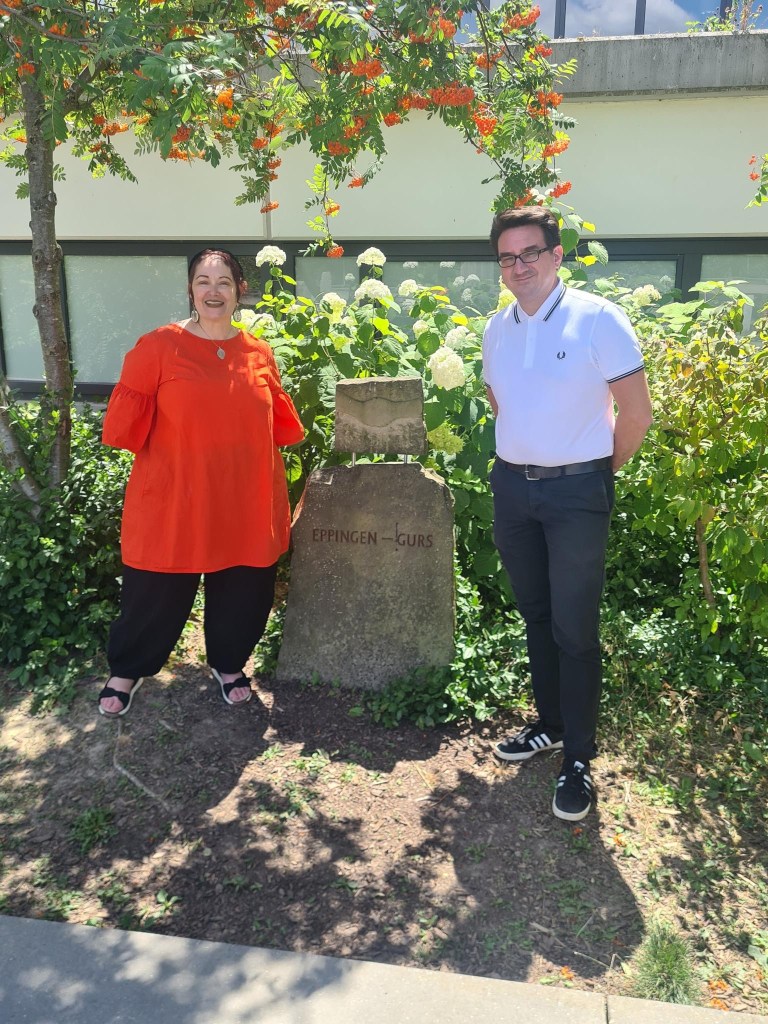
This past summer I traveled to Germany at the invitation of my friend Alan who teaches at a Gymnasium in the small town, village really, of Eppingen. He teaches history, English, Spanish, and anti-racism. He and some colleagues, all non-Jews, work with teachers in Israel and have a longstanding exchange between their schools. This fall was the first time the students from Israel had visited since October 2019 and Alan’s students will travel to Israel this spring for the first time in three years. Alan invited me to Eppingen for a couple of weeks and offered me up to speak at his school and several others in nearby towns. I ended up teaching in four schools in three towns and to grades 5 – 11. I was invited by English teachers, history teachers and religious studies – primarily Catholic education- teachers. Religious or Ethical Education is part of the state curriculum and what is offered is based on the majority religions of the area with an Ethics course for those who do not want one of the denominational offerings. They also learn about other religions – including Judaism – and I was the guest teacher for part of this learning. 

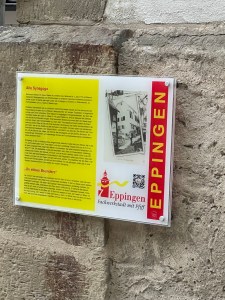
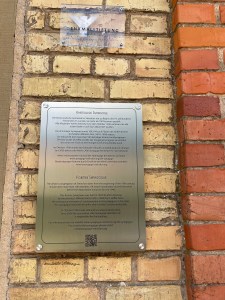
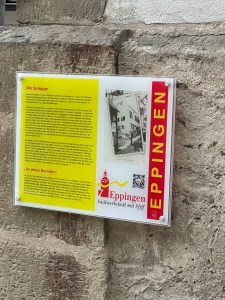
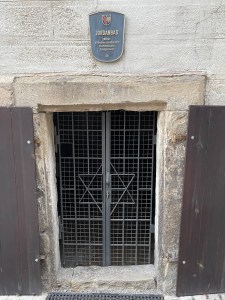
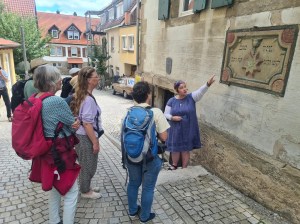
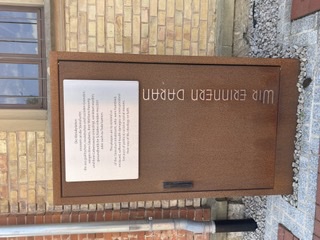
Informational plaque on the Alte Synagogue in Eppingen

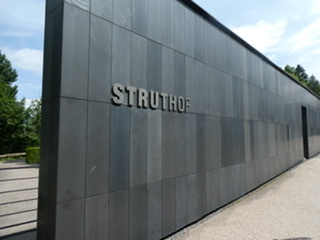
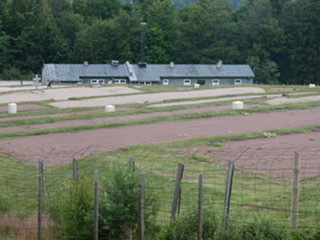
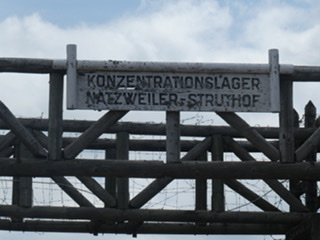
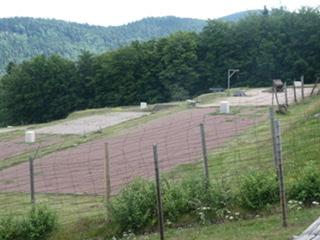
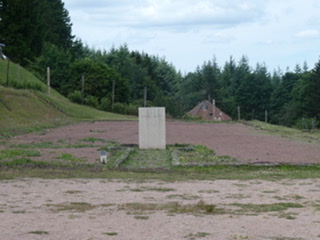
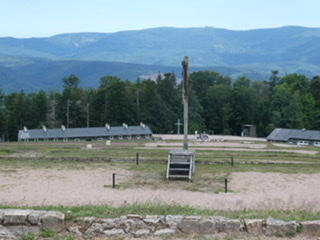
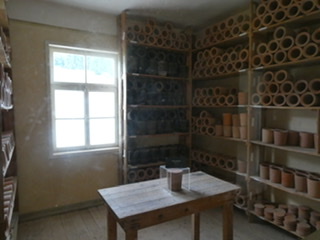
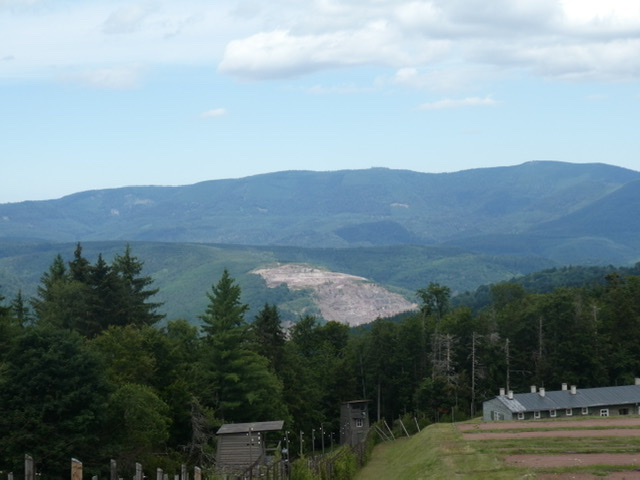
One of my first activities was accompanying the 9th graders on a field trip to Natzweiler-Struthof Konzentrationslager. Visiting a concentration camp is a fixed part of the history curriculum at Alan’s school and is recommended by the state authorities. The students were visibly disturbed by the camp, one boy almost passed out and had to be taken to the bus to rest. The girls were warning each other about what was in the next building as the groups passed along the roads in the camp. They were absolutely serious and somber the entire time. I toured this camp, a prison and labor camp primarily for members of the French Resistance, with Alan’s group of students who did not know who I was or why I was with them. A few asked as we walked through the camp, but most were only introduced to me during the “debrief” circle after the tour. Their reactions were varied as they figured out that I was actually Jewish – apparently saying I am a “Jewish teacher” did not have to mean that I was Jewish – just that I taught Jewish topics. A fact that made more sense to me after attending a course at the Center for Jewish Studies in Heidelberg where I was the only Jew in the classroom. Once they knew I was Jewish and a Holocaust Educator, they asked some questions about my thoughts on the camp. One question was “why would Nazis work the prisoners to death if they needed them to do the work?” This can only be answered by addressing the true evil of those in charge and this explanation was met with sad nods of agreement.

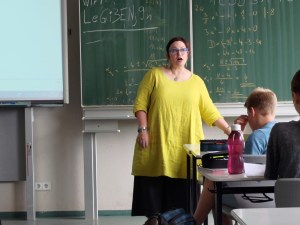
Anyone who has seen me teach knows that I love questions – asking and answering them. So, in all of the classrooms I visited in Germany, asking me questions was either the entire lesson – for example in English classes where they were practicing their language skills and learning about the US from me – or encouraged after I had presented a lesson on Judaism or on Jewish resistance during the Holocaust. The questions were many and varied – I wrote a whole blog post just on questions I answered – but a few stuck out. One relates to my topic today. I will preface sharing it with the context that most of the questions made me painfully aware of how the USA is viewed overseas. This was not long after Roe V Wade was overturned and one 11th grade English class requested that we discuss separation of Church and State and role [rule? Could be either really or both] of law versus religion in the US. They had done research and presented what they had learned about religion in the US versus Germany and its influence on everyday life. In every single class I was asked about guns. So, my response to this particular question was not so far off base. I was asked by a very earnest young woman “How does it feel to be in a country with an embarrassing past?” Bold question I thought. I began with my honest opinion that we needed to be doing a far better job of teaching about and righting the wrongs of our past connected to the genocide of the Indigenous people of our country, related to African Slavery and ongoing racism…and the young woman stopped me. “I meant Germany” she said. I laughed at my error. And then I said this –

“I am Jewish. When I first was thinking about coming to Germany a few years ago I wondered how I would feel and many questioned why I was coming here. My husband’s family is from here and they never wanted to come back and visit. But I came for the first time in 2017. I came to Berlin. And everywhere I went in Berlin was a reminder of, a memorial to, a monument to the absence of… the Jews of Berlin and of Europe. “The Memorial to the Murdered Jews of Europe” stands in Berlin and its museum or information center, as it is called there, is the most frank and honest presentation of what the Nazis did that I have seen and I have been to many Holocaust Museums. I know teachers in Germany who are working hard to teach the history of this time, to show what was lost and preserve what remains.” I went on to mention that I know the strictness of laws in Germany for anything connected to the Nazis. I spoke of restitution both general and specifically to my husband’s family members. I then said – “Your country faces its embarrassing past and is actively working to make sure it is not repeated here or elsewhere. My country has much to learn in that respect. I am happy to be here in Germany.”

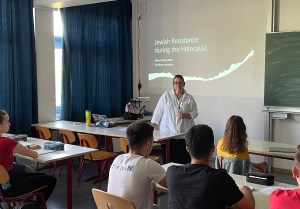
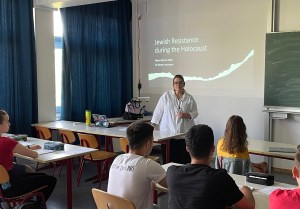
I in no way want to imply that anyone can make up for the evil that was done by Nazi Germany and its collaborators. They cannot. Or that Germany is perfect in its work to keep antisemitism, bigotry and racism at bay. No country is or can be. But there are teachers I met at each school, including my friend Alan, whose jobs include specifically addressing and confronting these hatreds when they show up. These teachers were eager to have me come and speak to their students. To teach their students about Jewish resistance and to introduce a new idea  – being an Upstander – into their understanding of this time. The students I spoke with were visibly moved when they learned I was Jewish and had come there to speak to them. The older students who I taught about Jewish resistance were gobsmacked by the actions of Jews to save themselves and others. Learning about rescuers who willingly risked their lives to save Jewish lives brought some to tears. Discussing a German woman saving the son of her Jewish neighbors, they said “she made the right choice.” They were shocked to see the way this woman was treated when the Nazis thought she was Jewish versus when they learned that she is Aryan. They go from insults to flirting. And the students commented that the Nazis could not tell which she was without her Ausweis – her ID. 

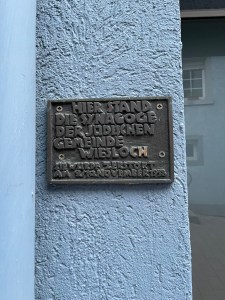
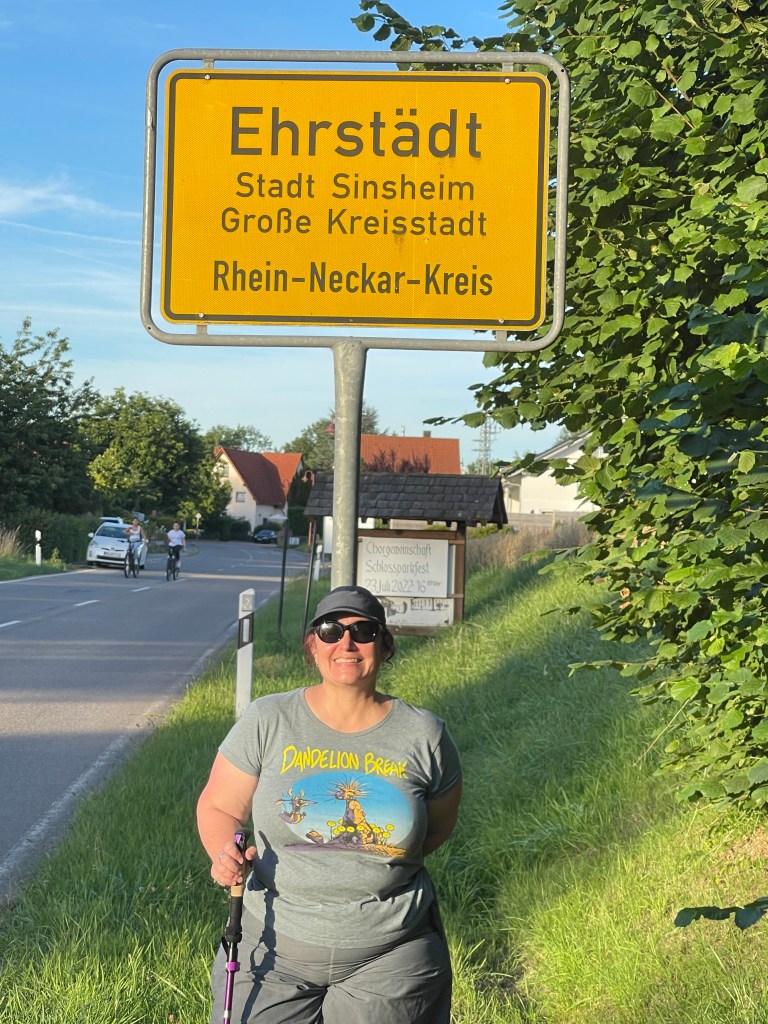
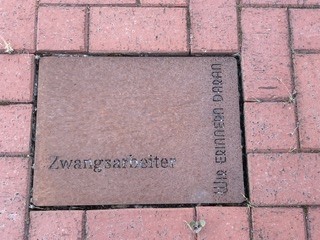
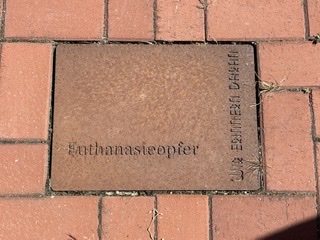
In every little town and village that I visited in this corner of Baden-Württemberg there was either a still standing Alte Synagoge or a sign or memorial on the site where the synagogue had stood until Nov 9th, 1938 – Reichspogromnacht – or Kristallnacht. In a few places, Alan and I wandered upon these plaques while “lost” and I would comment that we clearly were not lost but exactly where we were meant to be. Where there is a surviving synagogue, it is maintained and cared for by those in the community – meaning non-Jews. While clearly there was a Jewish presence in all of these small rural towns and villages in the past, there is none now. This is not all because of the Holocaust, many had moved to more urban areas prior to the 1930s. Alan is part of a “Friends of Jewish Heritage” group that cares for some of these sites and does educational programming around them. While I was there I spoke to this group during a Stammtisch – their monthly gathering on a Friday evening – we had dinner at a pub that used to be owned by a Jewish family and still has the cut in the door frame for a mezuzah. – and also was a docent at the Medieval mikveh in Eppingen at their invite during a day celebrating Jewish life in Germany.

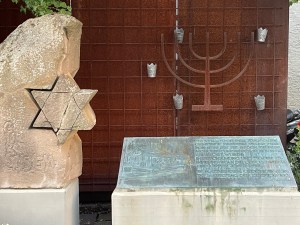
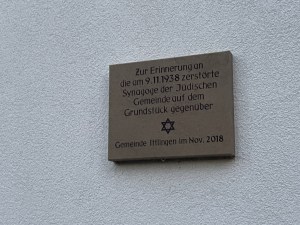
Memorial in Sinsheim where the synagogue formally stood
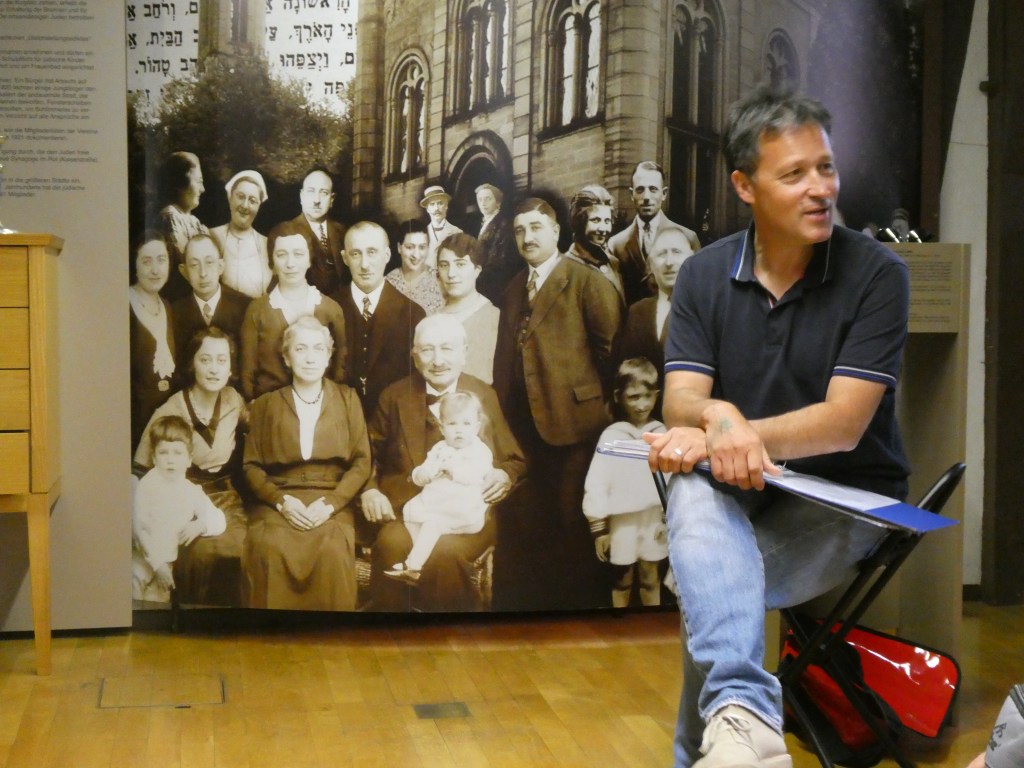
Teaching in Heidelberg

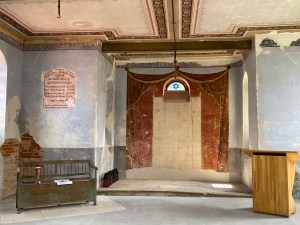
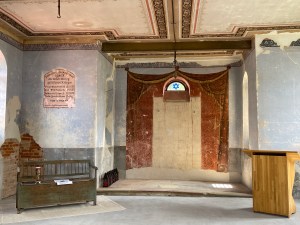
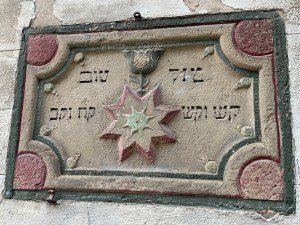
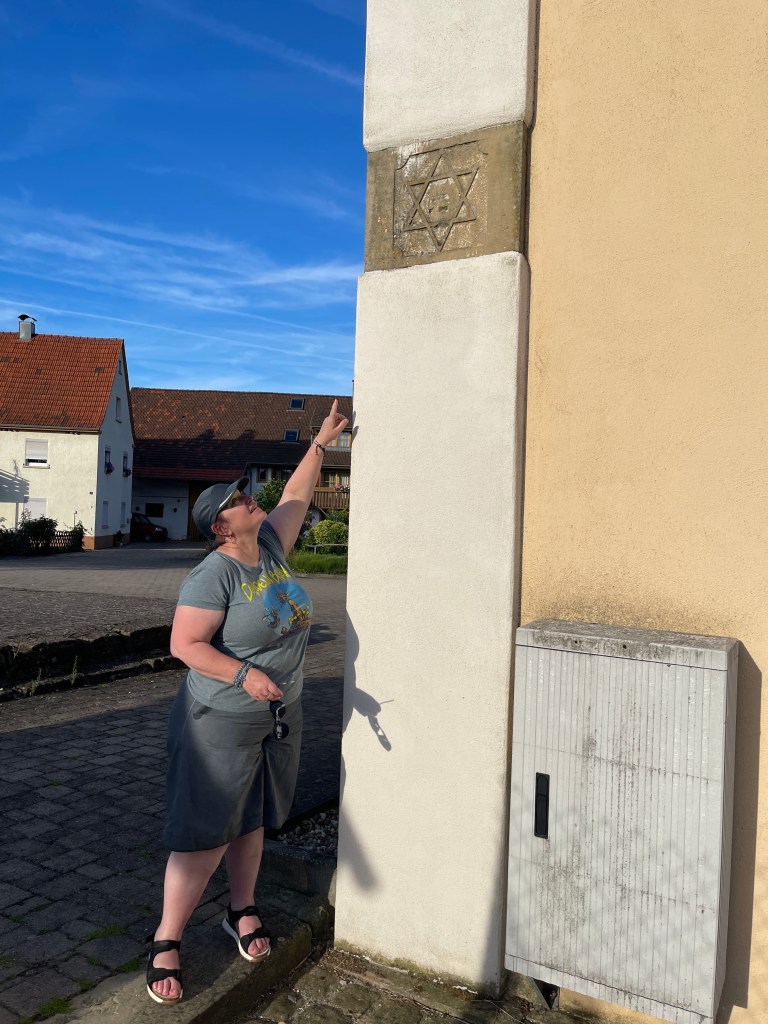
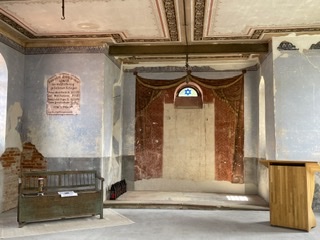
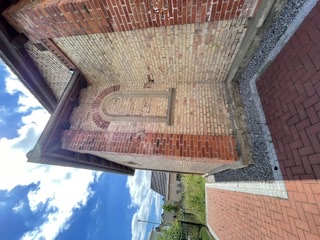
In Steinsfurt, the Alte Synagoge is cared for and shown by Jutta, the Catholic Educator at the Gymnasium in Sinsheim and she took me to see it after I spoke at her school. It was preserved, in quite good shape, because the Jews sold it to an Aryan farmer in October of 1938 before the last families left the village. This farmer stopped its destruction on 9 Nov 1938 “This is now an Aryan building. Leave it alone.” While using it to store potatoes, he also preserved the murals on the walls and some furnishings. Jutta views her work both to maintain the building and to collect the Jewish history of the village as an important mitzvah. She is also working to have Stolpersteine placed in Sinsheim and Steinsfurt. Jutta works with Muslim refugees who have moved into the area, including a refugee who has lived with her family for seven years. She clearly personifies the spirit of true Teshuvah that I am wanting to touch on. Her work, and her personal actions, are meant to create a world of “Never Again” for any population. This is that final step. And it is being done by many educators that I have known for years and those I met on this trip – in Germany and other countries where the Holocaust happened. And while many educators here strive to do the same with our “embarrassing” history, the past few years have made their work even harder.

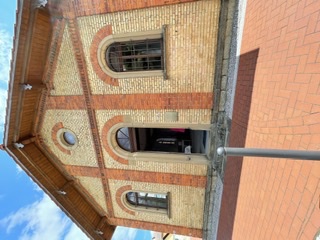
Synagogue in Steinsfurt

I know that this is not a perfect metaphor as those who did the evil of the Holocaust are not the ones showing that they would not repeat those actions. Thank God those who did commit them were not offered such an opportunity. But it does work to explain my confusion at the student’s question. It is the same as here, those of us being asked to make right the mistakes of our country’s past are also not the ones guilty of its crimes. Some would use this as an excuse to not address the errors of the past, many do, both here and in other countries. But those who committed these atrocities are no longer alive and if we don’t address the ongoing hurt and damage, who will? Generational trauma, as many in this community sadly know, is a very real thing. So, so must be generational responsibility for working to heal that trauma and absolutely to end ongoing systematic inequalities based in those past actions.

Joseph has to manufacture an elaborate ruse to test his brothers to see if they have learned from their treatment of him and its impact on their father and family. He sees that now they place their father’s wellbeing over their envy of any favoritism towards Benjamin, and so, he is able to reveal himself. Our human relationships can be obscured by past hurts that have not been fully healed. We may have to present ourselves as someone else and hide behind disguises or positions of power to protect our feelings and safety. Forgiveness follows repentance and forgiveness allows a break from the past. Hannah Arendt states in The Human Condition “Forgiveness liberates us from the past. Forgiveness breaks the irreversibility of reaction and revenge. It is the undoing of what has been done.” Rabbi Sacks states “Humanity changed the day that Joseph forgave his brothers. When we forgive and when we are worthy of being forgiven, we are no longer prisoners of our past.”   When offered with an opportunity for that final test of repentance, I hope that we are all able to both show and receive proof of sincerity and an opportunity for healing. Humanity will not move forward until this happens on both the small and large scale. 

A thank you to Yiscah Smith whose posting about this week’s parsha led me to Rabbi Sack’s writings on it and provided the Hannah Arendt quote. Shabbat Shalom. 

(As an aside – after reading this out loud I opened Twitter on my phone – the first post was about teaching the narrative of resistance by Africans in the Atlantic Slave trade and specifically the number of rebellions – and the third was about listening to Black people about what they think is best related to reparations from an account entitled “Antiracism best practices.” The one in between was about Putin.)

Ich Judenwochen – A Lone Jew in the Kraichgau

Standard
Ich Judenwochen – A Lone Jew in the Kraichgau

“Oh wait! Are you Jewish?” 

This was said to me in a lecture that I sat in on at the Jewish Studies Institute in Heidelberg. The lecture was in German and I had been doing my best, aided by Google Translate, to follow along. It also helped that it was on the Crusades and Jewish lamentations and accounts of this time period – a subject I have studied and that I teach. I had just written in my notes a minute before “I wish I could speak in English (or German)! I have sooo much to add to this discussion.” I had been told I was welcome to participate but “We will be speaking German.” I wasn’t sure if that meant I had to participate in German only, but that was what I took it to mean. Finally, unable to stand their “I wonder…” or “I know that Judaism says X so I am not sure why they would do Y…” statements anymore, I raised my hand and said “Can I speak in English, I can answer some of these questions.” As I explained Jewish concepts of dying Kiddush HaShem (for the glory of God – or as a martyr) and why in a religion where preserving life was the highest value dying for God (versus conversion at sword point) was also a highly religious act, one of the students turned and said those words “Oh wait! Are you Jewish?” They were thrilled to have an actual Jewish person in the lecture to explain from a more personal and less academic viewpoint how Judaism actually felt about these topics. I also discussed their comparisons to Masada and the three commandments that you cannot break and must choose death if those are your options. The concept of “Whose blood is redder,” meaning whose life is worth more, was also discussed and the idea that we cannot know whose life is really more valuable, ours or someone else’s, and therefore are not allowed to choose between our life and theirs. In the end they were very grateful for my additions in English and for the ability to discuss these topics with a Jewish person. 

Institute of Jewish Studies in Heidelberg

For many of the students to whom I spoke during my two weeks in Eppingen, Sinsheim and Heilbronn, I was likely the first Jewish person that they had met in person. Certainly the first that they had spoken to and could ask questions about Judaism. For some, not only was I the first Jewish person they had met, they were learning about a chapter of history they had not previously known existed from this Jewish person. Teaching German teenagers about Jewish resistance and the rescue of Jews by non-Jews during the Holocaust was a heavy task. But they were very serious and many were visibly impacted by the stories I shared. One teacher, who had watched my keynote speech from Australia in 2019 (https://youtu.be/ZdXbdRucP78), asked for me to teach about William Cooper, an Aboriginal man who protested to the German Consulate in 1938 about the treatment of Jews in Germany on ReichspogromNacht (Kristallnacht). As I told these young people about a man, who was not considered a human in his own land, who took the time to protest about the treatment of Jews in Europe, they were gobsmacked. This message of the brave acts of Upstanders and the difference that one person can make resonated not only with the students but with the teachers. I have heard since my return that my call to be Upstanders was invoked in a staff meeting to encourage admin and faculty to make a united stance against expressions of hate in the school. 

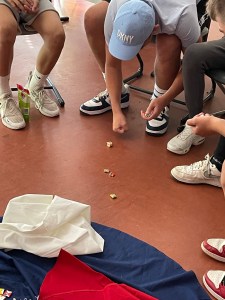
One of my favorite lessons was with a class at Selma-Rosenfeld- Realschule – a school named for one of the Jewish residents of Eppingen prior to the Holocaust. Her family’s home and bar still stand – I spoke there to a group of Jewish Heritage supporters. The class at this school was a Religious Education class of 6th graders. The teacher had a set of Jewish religious items and I brought along a few others. She had placed them out and covered them. The idea was the kids would uncover them one by one and I would explain them. At the end they were going to play dreidel. The class had great questions and shared what they did know about more common items like a Hanukkiah (menorah for Hanukkah). I then showed them how to play dreidel and handed out dreidels and “gelt” (fruit chews rather than chocolates) for them to bet with. I have never seen a group of young people have so much fun playing dreidel! This was also the class where I spoke the most German as their English was less advanced than other groups. It was a really nice experience all around and their first experience of Judaism was positive and fun.

Judaism teaches that we are all responsible for how our “people” are seen by others and that the missteps of one of us become seen as the missteps of us all. As a historically maligned and scapegoated group, this is very true and is not true just for Jews. Other marginalized groups have the same burden and experience. That said, I would like to think that I did my best to make sure that the students to whom I spoke took away a positive outlook of both Judaism – the religion – and individual Jews as well. That they will keep in mind the examples of Jan Korczak who would not leave his orphans even to save his own life, the Bielskis and other partisans who fought back and saved Jewish lives when they think about the history of the Nazis and the behavior of Jews under that oppression. I hope that when they think of the Jewish religion that they will remember my answer to what my favorite thing about being Jewish is – “I love that my religion demands that I be a better person each year. That it is not just a suggestion but that there is a time of the year for specifically working on this. For thinking back over the year and seeing where I went wrong and to think about how I could have done better and to resolve to do so in the coming year.” Again, the expressions on the faces of the students as I explained this were telling and they were clearly not expecting this answer and were moved by it.

Every small village or town that I went to during my two plus weeks in Germany had an “alte Synagog” or a plaque showing where the synagogue had stood until it was destroyed on 9-10 November 1938. Every one. In a couple places we found these reminders accidentally as we wandered around looking for the right street and found ourselves on what was clearly the RIGHT street for that moment. But that said, they did not have Jews. Alan mentioned the one or two Jewish students he has had over the years he has taught in this area. When I asked “for what percentage of those kids was I the first Jewish person they had ever met?” His answer was “I suppose easily 90 percent of the kids…but I can really only guess.” Each class I spoke to had been told that I was a “Jewish teacher from Seattle WA” but even then some were not clear that I myself am Jewish. Perhaps I only taught about Jewish things – like the professor in Heidelberg. In Eppingen there are several places of Jewish interest and I was the “tour guide” at one for the first ever Wir Juden Tag – which was more like Ich Jude Tag as I was the only Jewish person involved. As such, I was asked to speak at the medieval Mikveh (ritual bath) in town. The organizers figured I was the only person who would have used a Mikveh, so best to have me speak about it. 

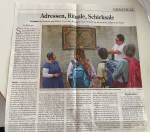
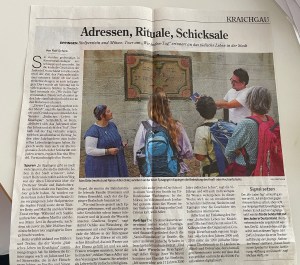
With Alan by my side to translate, we waited for visitors. Our first visitor was a reporter who ended up spending most of the day with us and writing an article about the Jewish life in Eppingen and my visit there. We also ended up on KraichgauTV in their weekly spotlight on life in Eppingen. (https://youtu.be/maw0rnFpLu0 – most of it is in German) Again people were excited to find out that I am Jewish and to hear me speak about the role of a mikveh in a Jewish community and what comprised a visit to the mikveh for a woman. We talked about how much different it would have been in this 500 or so year old stone mikveh versus in a modern one. I told the story about a woman in Jerusalem wanting to get married, but by a Masorti Rabbi not an Orthodox one, and being turned away from multiple Mikvaot for not having the right document. (https://www.myjewishlearning.com/2015/12/23/turned-away-from-mikvah/) Each group that stopped by was sincerely interested in the Mikveh, its history, the Jewish history of the town and my presence on this day to tell them about family purity and how the Mikveh was often the first communal structure built in a new Jewish community. 

Over and over my presence was taken as representative of the Jewish people written large. It was not the first time in my travels, which often take me to places where Jewish life used to be vibrant and well established but no no longer exists, that this was the case. “Ona jest Żyd?!?” still echoes in my ears from Warsaw in 2018. Anywhere this would have been an awesome responsibility, in Germany it was a heavy one as well. I try to make clear that there are many ways to be Jewish and will talk about my pluralistic school and the breadth of Jewish learning and practice I teach. I focus on the positive and share the universalistic, as well as proudly explaining the particularistic. Like to the young man who asked about my views on Jesus and wanted to clarify that I did not consider Jesus to be the son of God. My gentle “No. That would make me a Christian, not a Jew” was perhaps a more logical answer than he expected. Seeing the number of non-Jews living in these places working hard to make sure that the Jewish history of their village or town is not forgotten is heartwarming, even if it comes across a bit awkward. “Wir Juden Tag” translates as “We/Us Jews Day”. The idea for this day nationally was started by a Jewish man wanting to combat antisemitism while celebrating Jewish life in modern Germany – and in places where there is a reborn Jewish presence and community, this name makes perfect sense. Groups in areas without a current Jewish community chose to participate and focus on the Jewish heritage of their towns. In the TV piece, Michael Heitz speaks of the importance of remembering the lives and way of life of those Jews who lived in the area, not just remembering how Jewish life came to an end, and this is really the point. Perhaps there the “We Jews” of the name for the day is more likely to evoke the voices of the Jews who once lived there. Using my voice, with my visit, speaking to these young people, as well as to the adults, I am able to show that vibrant Jewish life continues, and helps them to have a deeper and more nuanced understanding of what was and what could be. L’chaim.

Q&A in Germany – What the questions asked say about how the US is viewed abroad

Standard

Many of my sessions in classrooms have been opportunities for students to ask me questions. Questions about the US, questions about Judaism, questions about my life, questions about the Holocaust, about history. Anyone who has been in my classroom, or had a child in my classroom, knows I love questions and discussions. Some questions were light and fun, others more serious. Some were asked once, and others were asked every single time. What I learned from these questions, especially the frequent fliers among them, is what German teens think about when they think about the US. And it is not flattering.

One student yesterday asked me “How does it feel to be in a country with an embarrassing history?” I began to answer about facing the history of slavery and the genocide of indigenous people and she stopped me and said “I meant here, Germany.” I laughed at my mistake. But really, after all the questions I had been asked that were about the embarrassing history of my own country, my mistake was understandable. Every single group of students asked me about “weapon ownership.” Not guns, but weapons was usually their word choice. “Do you own a weapon?” “Do you know people who own a weapon?” “Do you have a weapon in your classroom?” “Is it legal to buy weapons where you live?” “What do you think about people having so many weapons?” 

And the questions about owning, having, using guns were usually followed by questions about how safe or unsafe I might feel. Had my school had a shooting? Did I know of school shootings in the Seattle area? Did my school have a guard? Did I feel safe in my city, home, school? 

I would explain about hunting rifles and growing up with a dad who went deer hunting and had a hunting rifle. I would explain about people who had a pistol for safety. And then I would explain that no civilian needs a weapon of war, and they certainly don’t need 10 or 20 of them. I would talk about how I teach at a Jewish school and so we do have security because we are a target for antisemitic attacks. I would answer that I did not have and did not plan to have a weapon, but yes in many places it was far too easy and legal to buy them. I shared that I did have friends who are also teachers who had had shootings at their schools. And I said that this all needed to change but I wasn’t sure how or if it would. That I had to answer this question once was sad, that it was a question in every single class – from 7th – 11th graders – is really damning. 

I was asked a number of questions about TFG (you can Google that if you don’t get it from context.) Could I explain why people like him? My very honest and to the point answer was “No. No, I can not explain it.” This got a few laughs. I was asked what I thought the percent chance of his running for president again was. My somewhat cryptic but very honest answer was “Hopefully very soon it will be zero as it should be.” I am not sure the students understood that I meant he should be in jail where he couldn’t run, but it was a clear answer nonetheless. I had fewer questions about our current POTUS than TFG, and again this seemed a poor reflection on how our country is viewed from afar. 

I had a number of serious discussions about Roe vs Wade being overturned and the separation of church and state. I wrote about that in my first post. Students yesterday asked my thoughts on the topic and cheered – actually cheered – when I said that a woman should have 100% control of her reproductive processes and her body in general. In another class there were two young women in hijab and they were very pleased when I pointed out that both Jewish and Islamic law allow abortion and put the mother’s life first. 

In the category of random questions, today I was asked if I eat Chick-FIL-A and I got to teach the class about the idea of putting your money where your values are as I said that I didn’t like my chicken with a side of hate. My favorite random questions though were from a student on Tuesday. This young man was very engaged and asked a lot of questions. Most were very good questions. But he also asked the two most random things I have been asked this whole time. 

“What is your favorite 9/11 conspiracy theory and why” and “Do you know the show “How I Met Your Mother” and is it true people in America think Canada doesn’t exist?” WHAT??? To the first question I responded that I don’t “do” conspiracy theories. About the second, I assured him that I have been to Canada and I am sure that it exists. 

Many of the students want to know about school and education in the US. Do we really suck at geography? Why don’t we learn more foreign languages? Did I have a lot of debt when I finished college? Do we have a lot of fancy balls like in the movies about high school? Are all our tests multiple choice? To this one I answered that I don’t give tests and I was asked if I could perhaps move to Germany and please be their teacher. Is there only one kind of bread in the US? My answer that there was more than one kind but that I didn’t really eat bread earned the great follow up question of “What do you possibly eat for breakfast if you don’t eat bread?” I assured him there were plenty of other things to eat in the morning. 

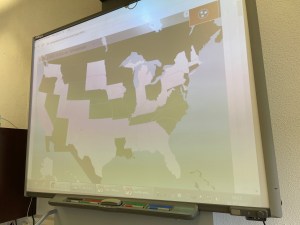
To the geography question I shared about being upset a couple of years ago that my students could not each name five countries in Europe and that I did a short geography unit on Europe as a result. When I was in Alan’s class (my teacher friend who set up my whole visit), he pointed out that his students can’t label a map of Africa. One of the students then spoke up and said that he thought perhaps it was too much to expect my students to know the countries of Europe as most German students couldn’t locate the US states on a map. To test this theory, Alan pulled up a quiz online where you had to correctly identify the states. This same student correctly identified at least half of the 50 states. I pointed out that this wasn’t helping his argument that it was ok my students couldn’t do the same on a map of Europe.

Another topic that came up a lot was racism. One young man asked specifically about the aftermath of George Floyd – knew his name – and the BLM protests. How had it changed my life and what did I see as the long term impacts? Had I experienced antisemitism was also asked several times. One person asked “Do you experience antisemitism every day?” The classes that I visited in Sinsheim and Heilbronn were diverse and their concerns reflected this diversity while living in fairly rural Germany. The schools I visited are all part of an anti racism project in the schools here and so their awareness of the topic was not surprising. The teachers who invited me into their classrooms all are working hard to create safe places for all of their students and to address discrimination when it happens.

Today’s classroom visit was with a lively bunch of 8th graders who are learning about the Pacific Northwest in their English class. They had great questions about Seattle and Washington. They asked how I would know someone wasn’t from Seattle and I made them try to pronounce Puyallup. They asked what was something unique about Seattle and I told them about KEXP and its global reach in promoting music and community. I showed pictures and they were amazed by the houseboats on Lake Union and asked about the foods and animals that were representative of Seattle. Salmon made both categories.

Meeting so many young people here in Germany has been really great. I loved seeing them warm up to me and realize I really would answer all their questions from “Do you like the Ramones” and “What is your favorite animal” to very serious questions about politics and law. My overall observations are that young people here and young people back in Seattle are not so different. They have similar concerns. They dress and act similarly. They respond positively to adults who are sincere and interested in them. I had students come up to me individually after a couple of classes and ask things that they did not want to ask in front of the group and I love that they felt that comfortable with me. I am particularly grateful for the students in each group who asked the first question or kept asking questions and who really thought seriously about what they wanted to learn from this opportunity to “Ask me Anything.” I just need to make sure no one hacks into my online accounts now that they all know my favorite pet, color, food, band and word in Polish. 😉

Teaching the Holocaust in Germany

Standard

Teaching about Jewish resistance during the Holocaust as a Jewish visitor to German schools.

(Again out of order chronologically, but fresh, and heavy, on my mind…)

This week I spent two days teaching at a gymnasium – “college prep” high school – in Heilbronn. I was speaking in their Religious Education classes, a History class and one English class. One of the teachers was very excited to plan a lesson for the students that both fit into their current learning and took advantage of my areas of expertise. We determined that Jewish Resistance during the Holocaust was the best way to do this. After some discussion we determined to start with a film that I show to my students at the start of our Holocaust unit in 8th grade – “Spielzeugland” (Toy Land.) This film tells the story of two young German boys – one Jewish, one not, and what happens when the Jewish family is rounded up for deportation. I won’t give away the story in case you want to watch it.

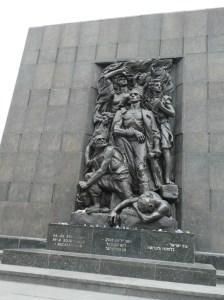
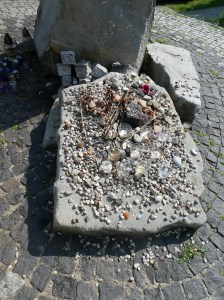
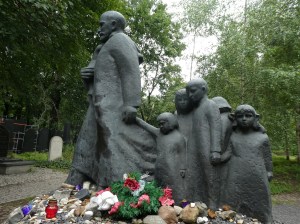
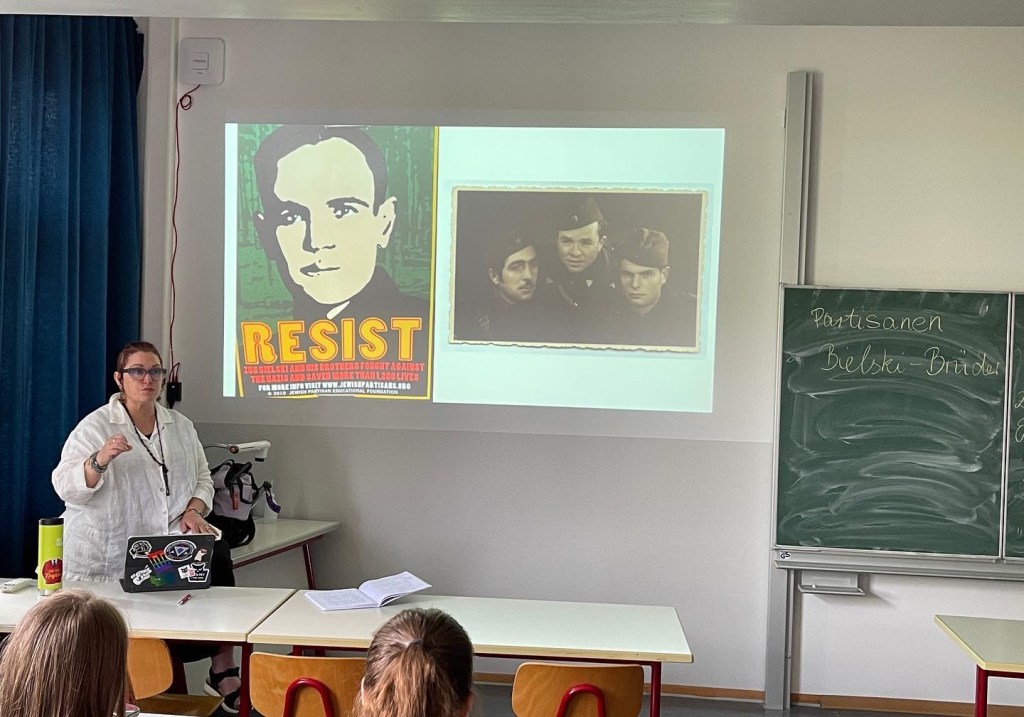
After this film and a discussion of it, I would then teach about Jewish Partisans and Ghetto Fighters using photos from my travels in Poland and Belarus. I would focus on the story of Novogroduk and the escape from their ghetto and into the woods where the Bielski Partisans were and, relative, safety, and also on the Warsaw Ghetto Uprising. I ended up teaching this lesson to three different classes over the two days I was in Heilbronn. The gravity of teaching German children about the lives, and deaths, of Jews during the Holocaust was not lost on me. And I was honored by the trust their teachers put in me to help them learn from this history and, hopefully, be inspired to work to finally make a world where these things stop happening again and again. 

We began with the film and as the final credits began to scroll, I wiped away a few tears. It was dead quiet in the room. I asked if there were any immediate questions or comments. There were none. Students were then given five minutes to write down or discuss with a peer their thoughts. I acknowledged for them that this was a heavy film and encouraged them to write down whatever their thoughts were. I also gave them the prompt of “Was what happened planned or spontaneous?” After their time to process it, I asked again for comments or questions. One student commented about the difference in the treatment of the woman in the film between when the Nazi officers thought she was a Jew and when they saw her Auspass and realized she was not. They went from yelling and cursing to practically flirting with her and being very helpful. The student said “Without her papers, they could not tell whether she was Jewish or not. We cannot tell who someone is just by looking at them.” There was general consensus that the events were spontaneous and that the woman made “a good choice” when she saw an opportunity to save a life. One of the students referred to the characters as a “Jewish boy and a German boy.” Andrea, one of the teachers who was observing the lesson as I would be teaching in her class the next day, said to me later “He was wrong. There were only two German boys.” 

I then taught the class the word “Upstander” and how it is important to add it as a fourth category when discussing situations of oppression. The usual three are Perpetrator, Victim and Bystander. I explained that a bystander, by choosing to do nothing, takes the side of the perpetrator. Their silence or inaction allows oppression to continue. I then explained that an Upstander is the person who sees a wrong and does something – small or big – to try to stop that wrong. I then talked about RIghteous Among the Nations – non-Jews who helped Jews during the Holocaust, and then on to Jewish resistance. We talked about the concept of altruism and the importance of doing the right thing purely because it is what should be done if one is a good person. That our responsibility to each other as fellow humans should be enough to motivate action. 

The students in this class and the two others where I taught this lesson, were all moved by the stories of religious resistance – observing holidays in Auschwitz, stealing the materials to make a Hanukkiah (menorah for Hanukkah) or to write from memory the Book of Esther so they could observe Purim. We talked about how having secret schools gave students hope as well as an escape from their grim surroundings. It showed that there was an expectation that they would live and need to know what they were being taught. I also talked about Aristides de Sousa Mendes, a Portuguese Diplomat, who lost his job and died in poverty for giving out visas so that Jews, and others fleeing Nazi Germany, could get out of France. Watching the faces of the students as we discussed each type of resistance, and I shared stories of specific examples, showed their surprise and their respect for those who took action. 

We then moved on to armed resistance and I told the story of the Novogroduk Ghetto and the digging of the tunnel for 206 meters and the escape from the Ghetto. I then showed pictures of “Forest Jerusalem” the Bielski Camp in the Naliboki Forest and told the students about Tuvia and Zus and the 1205 Jewish lives that they saved. I ended this part with my photo of descendents of Bielski Partisans dancing in the camp in 2019.

The final part of the lesson was about the Warsaw Ghetto Uprising. I asked the first class how long they thought the Jews, with few guns, starving and desperate, held off the Nazis. I was deeply moved by the first answer – “Two years?” I thanked the student for his faith and belief in these scrappy Ghetto Fighters. Others said “three months” and “a couple of weeks.” I shared it was almost a month and that this was impressive considering how lopsided the battle was. I ended the lesson sharing with them about one of my favorite Upstanders – Janusz Korczak – and his refusal to leave his orphans and how he made sure that they were not panicked as they went to the trains. The teachers shared that they had all learned Korczak’s pedagogy when they were in training. 

The discussion in each of the three classes was a bit different, but we focused on how being able to make choices – even if it is only if you will die in a camp or fighting Nazis in the ghetto – is important for one to retain their humanity. We talked about “choiceless choices” and the desire of Jews to assert their ability to resist. One of the teachers asked what the Uprising accomplished since it did not “succeed” in terms of stopping the Nazis. The students all commented on the hope it gave, how it let the Nazis know that the Jews could and would resist, and on the importance to those who participated to feel in control of their fate. 

In the third class, one young man asked me how one goes about forming a resistance group. “You can’t resist such powerful things on your own. How do you form a group to work together?” I shared how Emmanuel RIngelblum formed Oneg Shabbos in the Warsaw Ghetto. How he recruited his like minded friends and they recruited theirs and the group grew in this way. Others asked about how the Jews got weapons and how Partisans got food. I shared about Mira Shelub and her interview on the Jewish Partisan Educational Foundation site where she talks about “friendly and unfriendly peasants” and how the friendly ones gave them food and that from the unfriendly peasants, those who were supporting the Nazis, they took food that had been prepared for the Nazis to pick up. The partisans would leave a receipt to let the Nazis know that their food had been taken by Jewish partisans.  

At the end of each lesson we talked about my purpose in teaching this history. That I want people to know the stories of Jews who resisted during the Holocaust to counter the prevailing narrative that they did not. That I want to inspire young people to know that they can make a difference. I pointed out that the people who were partisans and ghetto fighters were not much older than they are.

I finished by saying that I want to instill the inspiration and confidence to do the right thing in a future that I hope that they never have. For them to be able to be Upstanders.

Nance in Germany – Sinsheim visit 8 July

Standard
Nance in Germany – Sinsheim visit 8 July

This post is out of order chronologically but was written right after my visit.

On Friday I went to Sinsheim, a town near to Eppingen to speak to students in a variety of classes. This was set up by Jutta, another Centropa teacher, who is the Catholic Religious Education director. A short train ride away from Eppingen I was met by Jutta at the train station and whisked off to her school. She was an excellent hostess and made sure I had all I needed.

The first class I was in was a year 7 religious education class. The students did not know I was coming and so were not prepared with questions, but they warmed up as the class period passed and in the end we ran over. The school has a collection of Jewish ritual items and I was able to use these, along with my own Tallis and tefillin, to discuss Torah reading, Hanukkah candle lighting and the commandment for placing a mezuzah at your doorpost and to wear Tallis and tefillin.

One student was curious about translation of the original Hebrew into other languages and we talked about the missing Nun line in Ashrei (Ashrei is an acrostic but does not have a line for the letter Nun (n) in the Masoretic text version) that was is present in the Dead Sea Scrolls psalms scroll. This shows that copying errors can be made and then replicated for centuries. This class was also interested in the nature of sin in Judaism and I talked about personal responsibility for fixing one’s missteps and the importance of the High Holy Days in reminding one of the importance of this. They had a tiny shofar that I was only able to get a very irritating squeal out of. Fortunately I have a video of me blowing the shofar and I was able to let them listen to this so they could hear what the blasts are meant to sound like. 

It was interesting to me that one of the students knew about Lilith and asked if all Jews consider Lillith to be the first woman instead of Eve. I did my best to explain the concept of midrash and its role in Judaism. Not sure if I was successful, but I assured her that the majority of Jews would consider Eve the first woman. 

My second class was an English class of older students who had voted that they wanted me to come and were excited to ask me questions about my life in the US. Again the striking down of Roe v Wade came up and I was asked how I felt about the issue of abortion. I was also asked if I felt unsafe in a country with so many guns and if antisemitic violence was a big problem. I was asked what was my favorite thing about the US and I had to think hard about what I could say that they would understand. We had already talked about the loss of rights for women, about racism, about the issue with guns, and about how expensive higher education is, so I was feeling like I needed to say something a bit more positive. I said that I loved the “idea” of what the US was meant to be – a melting pot where all were welcome and could make a new life and find success. But that right now it was only an idea and working to make it a reality for all was important. 

It is interesting the things that they know about the US and what is happening in our culture and society. One student asked about “pronouns” and why there was such a big deal about them. I explained that the idea of everyone sharing their pronouns was meant to normalize this so that those whose were not obvious were not singled out in having to share theirs. I talked about having trans students and how beautifully the other students accepted these classmates and that it gave me hope for our future. 

The third group was a mixture of 9th grade religious education students and were quite quiet. It took some prompting to get them to ask questions, but we ended up having a very meaningful conversation. One boy was clearly from a very religious family and thought deeply about his own practice. I was going to show them tefillin and wanted to have them think about what how they would interpret the verses that resulted in Jews wearing Tefillin – “bind them as a sign upon your arm, and they shall be as a reminder between your eyes.” This young man gave the most beautiful answer “that you should use the strength of your arms to do God’s work and should keep God in your mind and in how you look at the world.”  WOW! I then showed them tefillin and said that it was certainly the goal that wearing this very literal interpretation of this commandment was that you would do those things, but that his more active interpretation was lovely. 

This same boy asked me “What do you think of Jesus?” I answered that he was a teacher who had his own take on how to be Jewish and had many teachings, which came from Judaism, about being a good person. I said that I did not think he meant to start a new religion, that it was Paul who took it that direction. He then said “So, not the son of God?” I smiled and said “If I thought Jesus was the son of God, I would be a Christian, not a Jew. Belief in this is what is required to be a Christian.” He smiled and agreed with this. 

After we were done with the classes, Jutta, my hostess, took me to see the small old synagogue in the nearby village of Steinsfurt – this was where I was supposed to go on Sunday when I was on the wrong platform and missed my train – twice. I was so glad she was able to take me to it now. It is a small building and the interior is still much like it would have been when it was a synagogue. The courtyard outside has stones in honor of each of the populations targeted by the Nazis. Jutta shared that there is a mikveh under the courtyard. They do not have the money to excavate and preserve it currently and so having it covered is the safest for now. She also shared how the building survived Kristallnacht Pogrom because it had been sold to a German neighbor who came out and stopped those who would have destroyed it. “This is a German building now. It is my property. Leave it alone.” That this had to happen in a very small village here shows how widespread this “spontaneous” expression of outrage was. 

It was again a lovely thing to see the people who live here working to preserve the heritage and property of a community that is no longer here. Jutta is Catholic and very involved in her own church and community, but is also involved in preserving and restoring Jewish sites. She also works with refugees and has a young man that has lived with her family for seven years who is a refugee. Jutta has also been trying to get Stolpersteine – “stumbling stone” – memorials placed outside the former homes of Jewish families in Sinsheim. She has met some resistance and is planning to have her students work on this project as it will be more acceptable to the community if it comes from the young people rather than adults. I wish her luck on this undertaking. It was lovely getting to know her and see the good work that is being done in this community.

Nance in Germany 2022 – Natzweiler KZ Lager

Standard

While folks back in the US were deciding if or how to celebrate The Fourth of July in this year where our rights, freedom and liberty seem at high risk, even for those whose privilege generally has kept them insulated from previous or ongoing injustices and inequality, I joined the Year 9 students of the Hartmanni Gymnasium on their field trip to Natzweiler – Struthof Concentration Camp and Strasbourg. The experience of visiting a Nazi site with Germany students was one I was not about to pass up. Alan and I had discussed the impact that this usually has on his students and having me along, a Jewish teacher from the US, would add to this experience for them. 

Natzweiler – Struthof was the main camp of a network of prison/forced labor camps in Occupied France and the southwest of Germany. The earliest and most numerous prisoners in these camps were French resistance fighters and other political enemies of the Nazis. Jews were shipped here from the East, some specifically to be used for medical experimentation. The camp has a very strong patriotic connection for the French and many of the memorials within the camp have a strong French and Christian nature. 

When I first walked through the gate and into the camp, I immediately thought of Boris Pahor, a Slovenian who was imprisoned by the Nazis and whose memoir, “Necropolis,” I had read as part of working my way through Balkan literature. I did not however think that Pahor had been imprisoned in France, so I pushed away this thought and assumed that the camp was just similar to the one he had been in. Imagine my surprise about 30 minutes later when Alan, sharing some information about the camp with his students,said Pahor’s name and read an excerpt from his memoir! I apologized to the corner of my brain that had presented me with Pahor shortly before and promised to not doubt it in the future! In his book, Pahor recalls the conditions of the camp and his struggle to survive and to help others survive in inhumane conditions. It was his description of the camp and its conditions that caused me to unconsciously recognize it immediately on entry. 

During our tour of the camp we visited the Appelplatz – the yard where all the prisoners gathered each day to be counted and recounted while standing in the hot sun or bitter cold. This was also the place where punishments and executions were publicly carried out and a gallows still stands there as a reminder. We then worked our way down the hillside to the “Punishment Block” and then the crematorium and rooms for medical experiments. Natzweiler was not a death camp, but prisoners did die from malnutrition, brutal mistreatment, disease and other causes. Others were victims of medical experimentation. These were the bodies that were cremated here. 

In a room in this building were shelves full of clay urns. If a family paid to have their relative’s remains returned to them, these urns were what they were sent. This detail reminded me of a story I read years ago about a family whose father was taken during Kristallnacht and whose remains were sent to them in a box. I was curious how many actually paid to have remains sent, or how they were informed that this was an option. It is mind boggling to me that there was a mechanism for people to claim the ashes of their loved ones who had been crushed under the wheel of the Nazis and cremated in a prison camp. How many of these urns were used or do the full shelves reflect the reality that very few were ever used? 

We then went back up the hill and had time to visit the permanent exhibit in one of the barrack buildings. This gave a history of the area – it had been a ski resort prior to becoming a Nazi Concentration Camp – and information about both the prisoners and the Nazi leaders who ran the camp. There were many images drawn by prisoners in the camp, as well as haunting paintings of huge eyes in gaunt faces or just the eyes. I also walked up to the large “eternal flame” monument that was at the top of the camp. Next to this was a graveyard – again with all crosses. An unknown prisoner is buried in the memorial and the impression of a “typical deportee” is seen in the stone flame shaped structure. 

After we were done touring the camp, Alan and his colleague had the students circle up for a debrief on the experience. The students had been very serious and respectful throughout the tour and many were very clearly impacted by the experience. At one point one student had felt faint. Several of the girls warned their peers in another group as we passed each other. They were clearly very upset by the crematorium and punishment blocks and wanted to be sure that their friends were prepared for what they would see. In the circle they asked great questions and expressed their shock about what they had seen. A few questions stood out. 

One of these is an eternal question about Nazi work camps. Why did they mistreat and starve their workforce? If these prisoners were doing necessary labor, wouldn’t you want to keep them strong and alive?  I was asked this privately before it was asked again in the circle. My answer was that they did not see their prisoners as human and felt that there was a never ending supply of “sub-human” laborers to replace those who died. I think my answer seemed so unbelievable that they had to ask it a second time to Alan. His answer was much like mine. 

Natzweiler Struthof sits in the Vosges Mountain range and really is surrounded by natural beauty. The question was asked “Do you think that the prisoners ever had the time to appreciate the beauty around them?” I first said “I don’t know that they had the strength to lift their heads high enough to see the beauty of the nature around them. I then explained that many camps were in beautiful places as they were remote so that they were harder to escape. This juxtaposition has struck me at various places where evil happened in a beautiful setting. I mentioned Ponary in Lithuania which is where this desecration of nature by evil first struck me. I said that I found it sacrilegious. 

As we left the camp the students were quiet and reflective. They all were clearly impacted by what they had seen and learned. Sadly my German, and the fact it was my first time with these students, did not make possible a deep discussion on what they were thinking beyond what was offered up in the circle, but it was clear that the implications of such a place were not lost on them. Walking back to the bus I had a conversation with one of the other teachers, it was their first time at the camp, and they expressed a sincere desire that the prisoners had been able to find some hope or beauty in their surroundings and that it gave them strength to keep going. I mentioned Viktor Frankl and “Man’s Search for Meaning” and Frankl’s conclusion that we all need something to give us a reason for living and his focus on the “why” of living that allows us to survive the “how” we are currently in. 

After this somber morning, we went into nearby Strasbourg for a short visit. I stayed in the general area of the cathedral and enjoyed its amazingly detailed exterior and the beautiful stained glass windows inside. Really just a taste of this beautiful city and reason to return. 

So, back to this all being on the 4th of July – Making such a visit on this day was an excellent reminder of what we need to avoid and that we must always stand up to oppression – our own or that of others. Whether we are fighting for democracy in our own country, supporting those doing so in Ukraine, or speaking out against ongoing violence in other parts of the world, we cannot evil win. 

Nance in Germany 2022 – First weekend

Standard
Nance in Germany 2022 – First weekend

In response to my frustration at finding myself finally able to travel but without a plan for travel and learning for this summer, my awesome friend Alan offered up that “perhaps I could come and be a visiting scholar at his school for a week…or two.” I immediately said “That would be wonderful.” So Alan inquired of his principal and I asked The SAMIS Foundation if I could use my professional development money that was part of my R. Greenberg Master Teacher award for this purpose. Both said yes, and so I am now writing this from a hotel room in a beautiful half timbered building in Eppingen, Baden – Württemberg, Germany. 

I arrived on Thursday, 30th June, and made my way from Frankfurt to Eppingen. It was wonderful to be back in Europe and I was quickly reminded of some basic differences between here and Seattle. The bottom floor is 0 not 1. The ground floor is just that, it is not the 1st floor. People smoke here. A lot. Everywhere. Seattle is practically smoking free since you can’t smoke inside or within 25 feet (7.6 m) of the door or windows of a public place. There are cigarette vending machines ala the 1970s all over the place – literally on the sides of streets in residential areas. Crazy!

On the weekends that I am here I am staying in “Rapunzel’s Tower.” This is a tower that is part of the outer wall structure of the 17th century castle where Alan lives. I have always wanted to live in a tower and so am very excited about this. The first night I was there it was windy and raining. There were many loud and concerning noises for much of the night. Once so loud I sat up in bed and yelled “Hello?” I thought someone had broken down the door!!! I told myself it was only trees banging on the roof because of the wind and went back to sleep. The next night Alan and I walked into the local village for dinner and were walking down the drive behind the castle. I looked up and noticed that there were NO trees anywhere near the tower roof. So I was a bit concerned about just what was making all that noise. Alan reminded me of the cute Dormouse I had encountered getting dressed that morning and said that that was the source of the noise. Later we were in the tower and he confirmed that this was indeed the issue. Apparently there are more dormice than the one I saw and they like to party – hard – all night long. At least knowing the source allowed me to not panic when they managed to crash about at 2 am. 

No trees near that roof…

Friday I came into town with Alan so I could meet the principal of his school and some of the teachers that I would be working with. It was a day of oral exams for the graduating class and in Germany teachers from other schools come to judge/grade these exams. This meant that some of the teachers at other schools that I will be visiting were here in Eppingen for the day. It was great to meet them and quickly other teachers decided they also wanted me to come to their classes and my “dance card” quickly filled in. 

Alan took me to the cemetery right by the school. Of interest in this small plot were a few things. The grave of a Catholic priest who was imprisoned by the Nazis for his defiance regarding their treatment of Polish forced laborers. He allowed them to receive Communion and attend mass at his church and was sent to Dachau for four years. His crime was “offending the healthy national feelings” of Germans. Also buried on the edge of the cemetery were Soviet POWs and Polish forced laborers who had died while in Eppingen during/after WWII. This was particularly interesting to see and think about who had arranged for these prisoners to be given a burial in the city plot. 

On Saturday I joined Alan at his school’s graduation or “Abitur” as it is called here. It was a lovely ceremony and I was very impressed with the accomplishments of the students and the prizes given for each subject and for overall scholarship, leadership and the like. The “valedictorian” was a young man who received 898 credits out of 900 possible during his last two years of Gymnasium (college prep high school)!!! Other students were equally impressive winning multiple subject specific prizes, some even in multiple languages. The students do not wear cap and gown, but rather dress up quite formally. The girls in particular were just stunning in their formal gowns and looked as if they were going to the prom rather than graduation. Another cultural difference was the availability of beer at the event and the fact that the graduates are old enough to partake. The ceremony is planned and organized by the 11th graders who also sell drinks (beer and soft drinks) as well as pretzels to raise money for their graduation. It was lovely to meet some of the students, including the valedictorian, who was a modest and serious young man, and his sister who will be in one of my classes this coming week. She told me she was very excited to have me in their class. 

Sunday was a low key day of moving into town and wandering around a bit on my own. Eppingen is a lovely town filled with amazing half timbered buildings. It is amusing to the locals how taken I am with the buildings of their town which they see every day and, in my opinion, do not properly appreciate. I was going to go visit another village on Sunday but failed to find the correct platform at the train station. Good news is that I will need to be on that platform on Friday very early and now I know where it is! The sights of Eppingen and some delicious hausgemacht Eis (homemade ice cream) more than made up for missing the train. 

More on my first two days with the students in my next post. 

Rapunzel’s Tower and Nance’s luggage.